


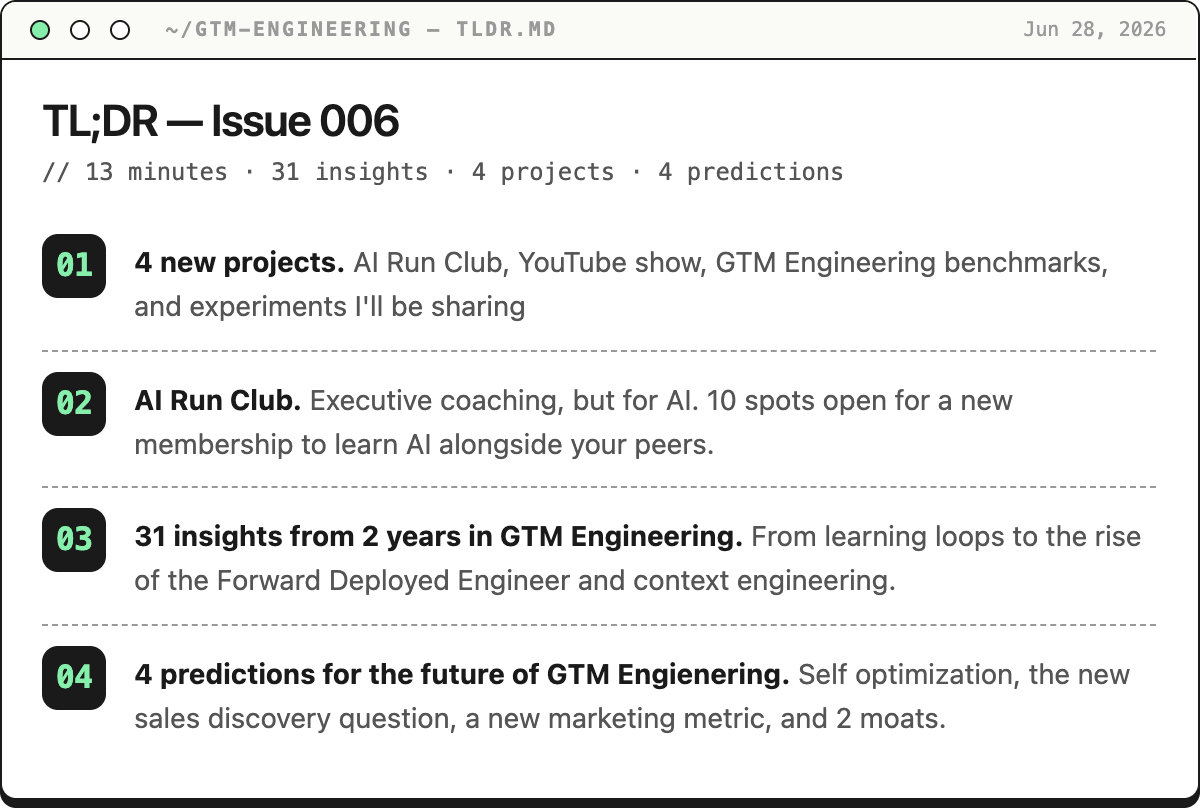
Welcome to The GTM Engineering Newsletter. Hi, I’m Alex, one of the first GTM Engineers at Clay. My goal is to help you and your team skill up on AI and engineer modern GTM systems. Over the past 2 years, I’ve helped NVIDIA, Reddit, Twilio, Atlassian, and many others build with Clay & AI. Join 7,400+ GTM operators, founders, and investors.
Clay grew from < 30 to over 300 in 2 years. Sales will grow to 100+ by EOY from 60 today.
As new GTM Engineers join, I’m frequently asked: “what have you learned about AI & GTM Engineering over the last 2 years that’d help me get going?”
In this post, I share 30 insights I’ve been collecting & where I think GTM Engineering is headed.
Before we dive in, I also want to bring you up to speed on a few projects I’ll be sharing more of soon:
AI Run Club - Executive coaching, but for AI. More on this below.
GTM Engineering Benchmarks - A new content series that will help you:
Benchmark against your peers
Provide steps you can take to improve your GTM systems
Behind the scenes on how we built the workflows to collect the data
GTM Engineering Labs - A YouTube show that I’ll host and will be produced by the Clay Studios team. (Might change the name, tbd)
Experiments - I’ll be using this newsletter & site to run growth experiments and share everything that I learn. The first one will be using a Job Board to drive programmatic SEO. This will come with a twist…
If you’re not subscribed, come join the fun!
AI Run Club
It takes time to become AI-fluent (and actually productive). Tinkering, experimentation, & distilling/staying on top of what you really need to know.
The challenge is execs are too busy.
I’m starting the AI Run Club with fellow AI-pilled friends Nick Goel, GTM Engineer at Clay, and Jeff Ignacio, RevOps leader who writes the popular RevOps Impact Newsletter.
Our goal is to help execs accelerate their AI skills (and AI strategy for their teams) with:
Virtual lessons
Weekly content
Community of like minded
We’re looking to start with 20 VPs (10 open spots) who:
Understand the importance AI skill development
Deeply feel this is the key to staying competitive
Have a desire to learn
Excited to connect & learn from peers on the same journey
Respond to this email if you’re interested in the program and I’ll tell you more.
31 insights from 2 years in GTM Engineering
1. GTM Engineering is not just outbound email.
Sounds obvious, but people forget there’s almost infinite use cases (many not discovered). Which ones are most common/needed? I shared the most in demand Clay use cases that enterprises are paying for on LinkedIn:
CRM enrichment
TAM sourcing
Automated inbound
AI outbound
Account research & scoring
Signals & intent driven workflows
Account Based Marketing
GTM co-pilots
Just in time rep enablement
Data analysis (like reverse engineering signals on closed won opps)
2. AI broke the SaaS post-sale model.
Deploying AI isn’t like deploying SaaS. This is why the Forward Deployed Engineer is the hot new role (and why Clay is building a team). There's A LOT of customization to get AI working: context engineering, discovery, evals, iterations, constraints, etc.
Rise of the Forward Deployed Engineer

AI Agents broke the SaaS delivery model. a16z put it perfectly:
Enterprises buying AI are like your grandma getting an iPhone. They want to use it. They just need someone to set it up.
Customers need help to figure out how to take existing business context, workflows that aren’t well documented, and then integrate AI into it all.
3. Executives all want to adopt AI, but struggle to give direction.
Becoming AI-fluent takes time, tinkering, and experimentation. Naturally, they don’t have this luxury. This impacts how they direct their teams to use AI. There’s a big opportunity to provide an accelerated learning path and that’s why I’m bullish on the AI Run Club.
4. AI is reducing team sizes, and not replacing all jobs.
There’s a lot of fear, but it’s really those who become AI-fluent who they need to worry about. New titles have emerged to put a name on those who are AI-fluent and it’s typically just placing ‘Engineer’ after the function; like Marketing Engineer from Profound.
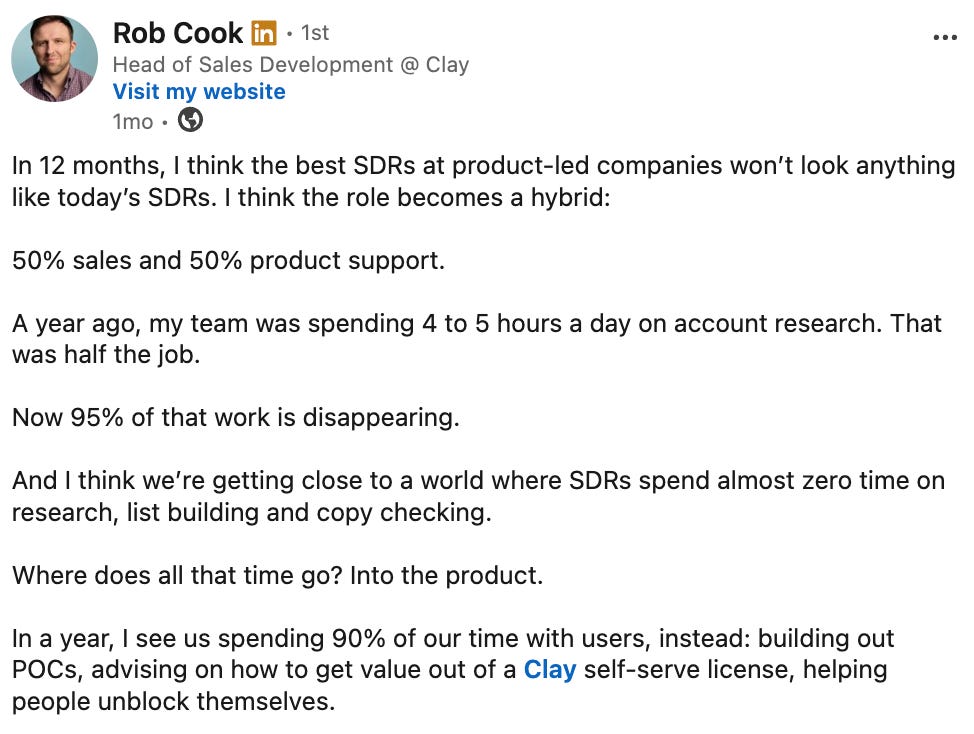
Some companies have significantly reduced their SDR teams or cut them. This is more prominent for inbound SDRs. Clay has an SDR team and its growing.
Rob Cook leads the team and he’s one of the best SDR leaders I’ve come across in my career. Come join if you’re looking at these roles.
5. AI Software Engineer > GTM Engineer > Forward Deployed Engineer.
AI 100x'd software teams 1st. Then came the GTM Engineer to bring products to market faster. Now the FDE is on the rise to ensure AI products are sticky and deployed correctly. Every size company from early stage startup (1-50 employees) to large enterprises are hiring for the role.
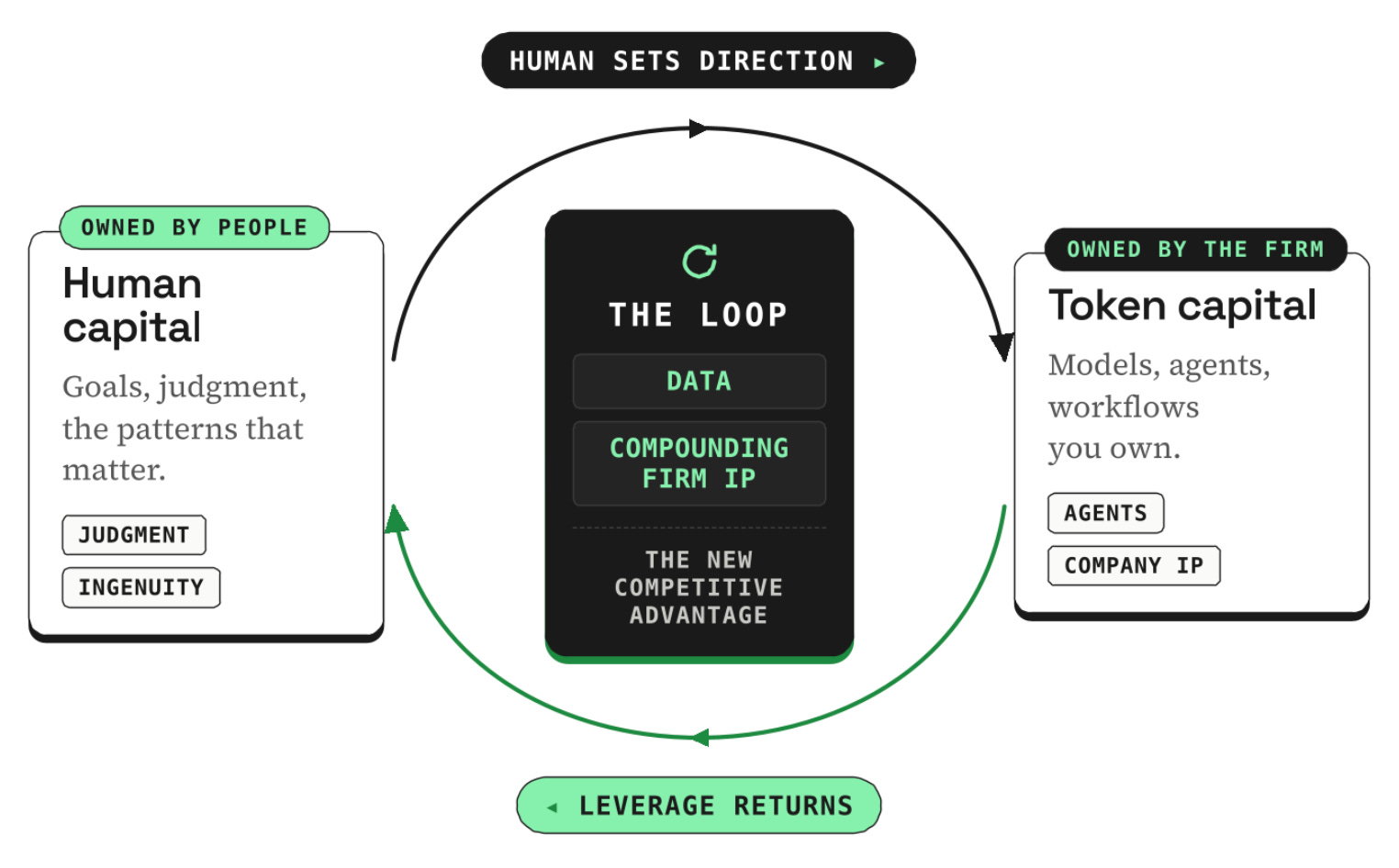
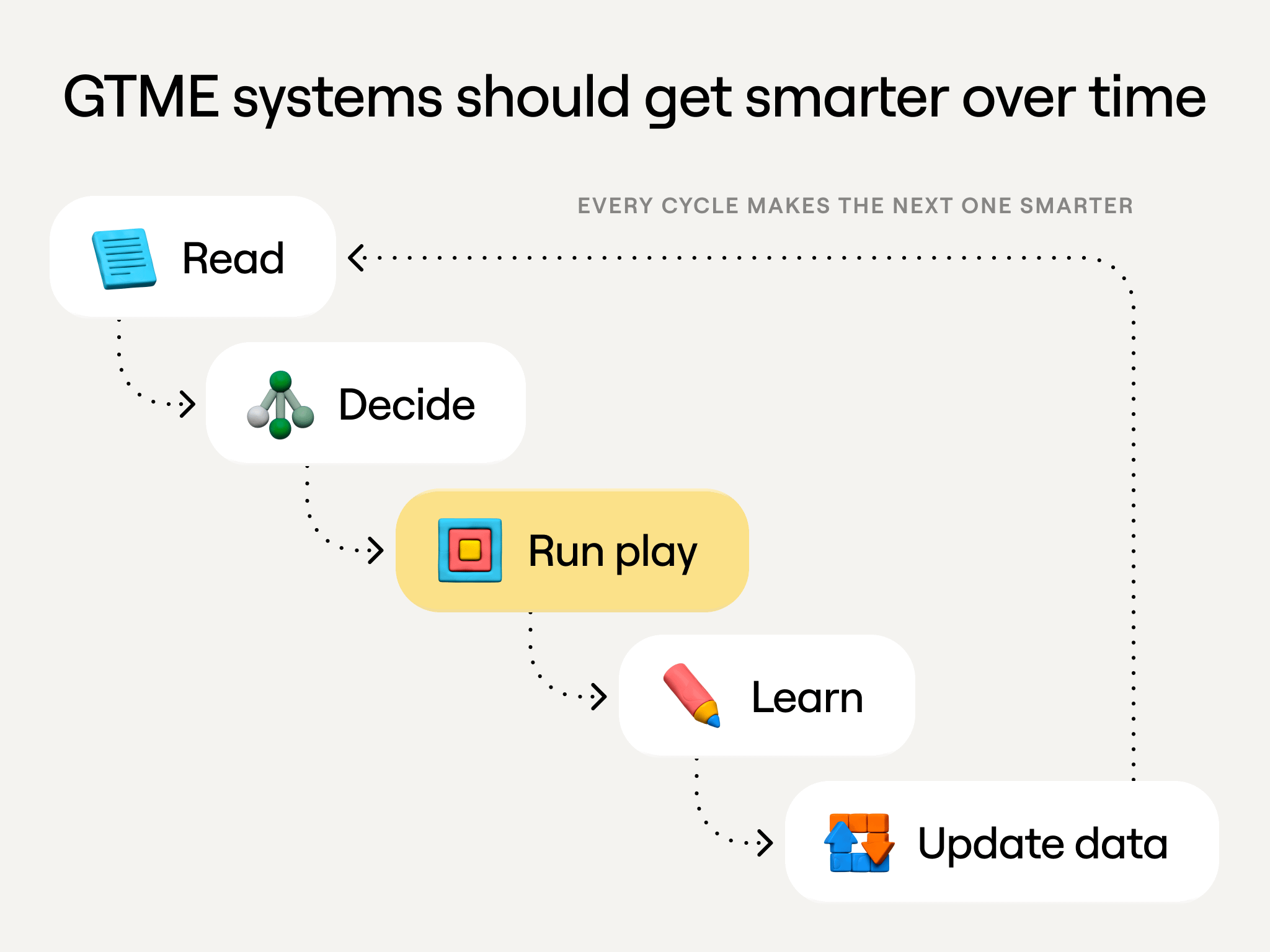
6. The next frontier in GTM is learning loops & self-optimizing systems.
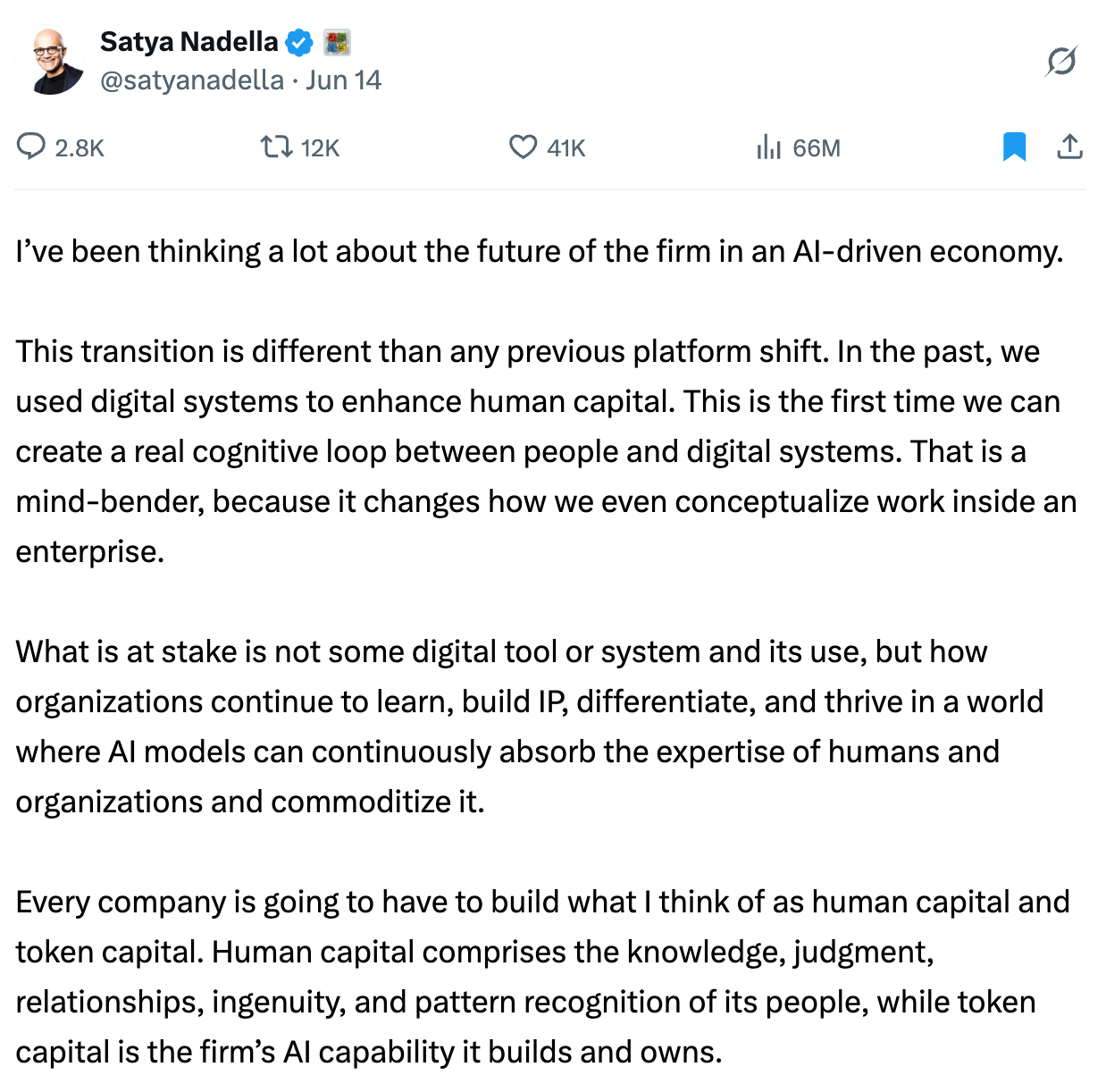
Learnings compound into nuanced playbooks over time and add to your moat.
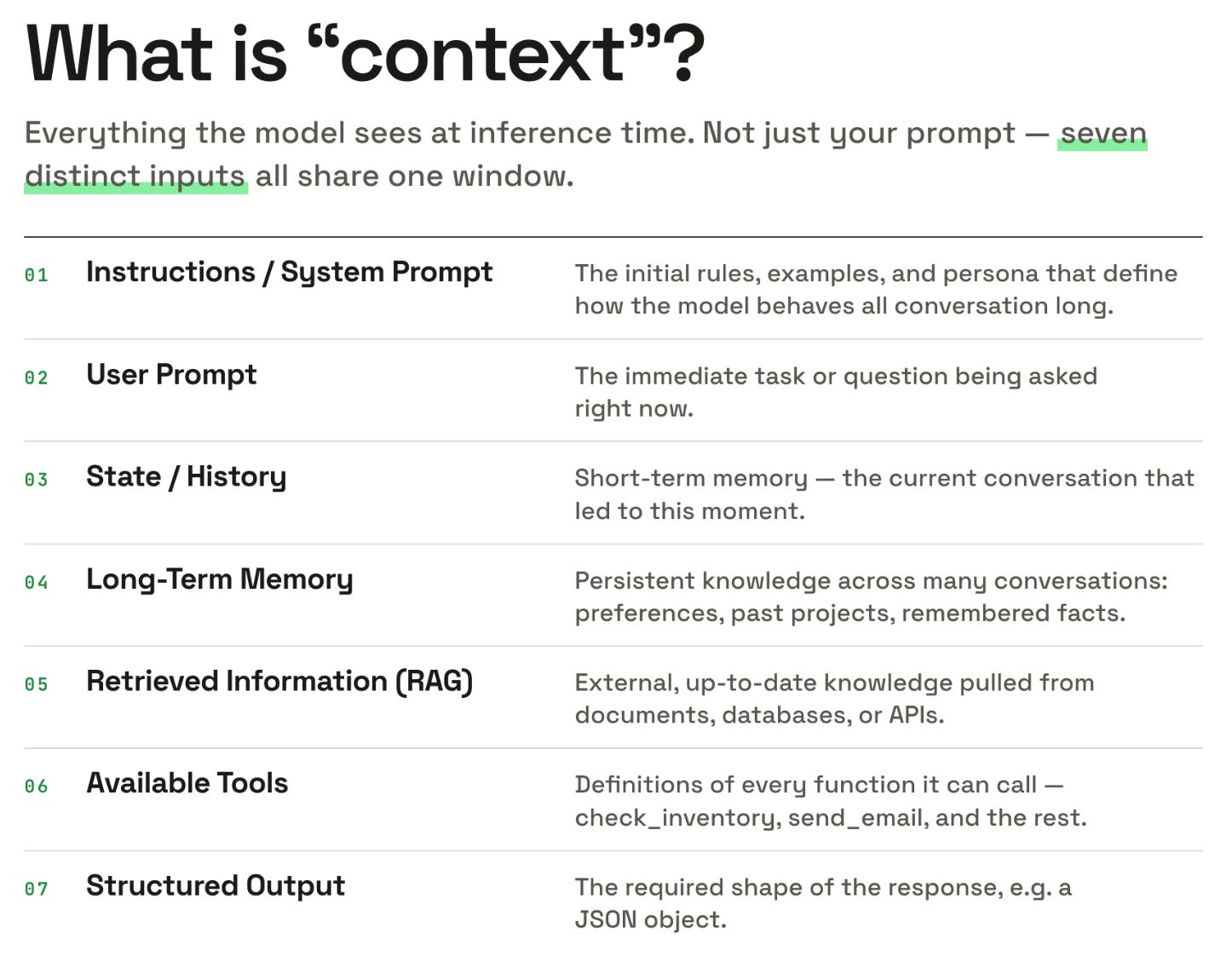
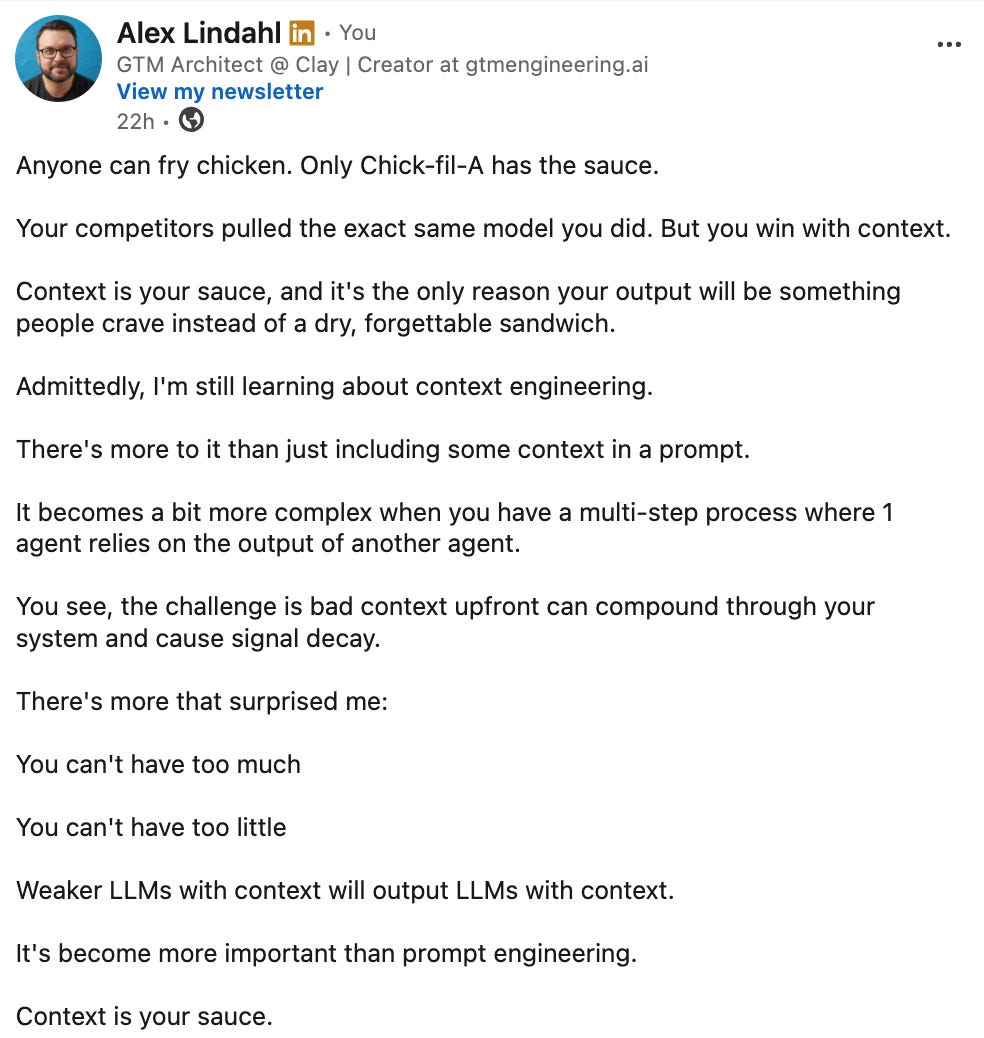
7. Context engineering is more important than the workflow.
Bad context upstream compounds downstream.
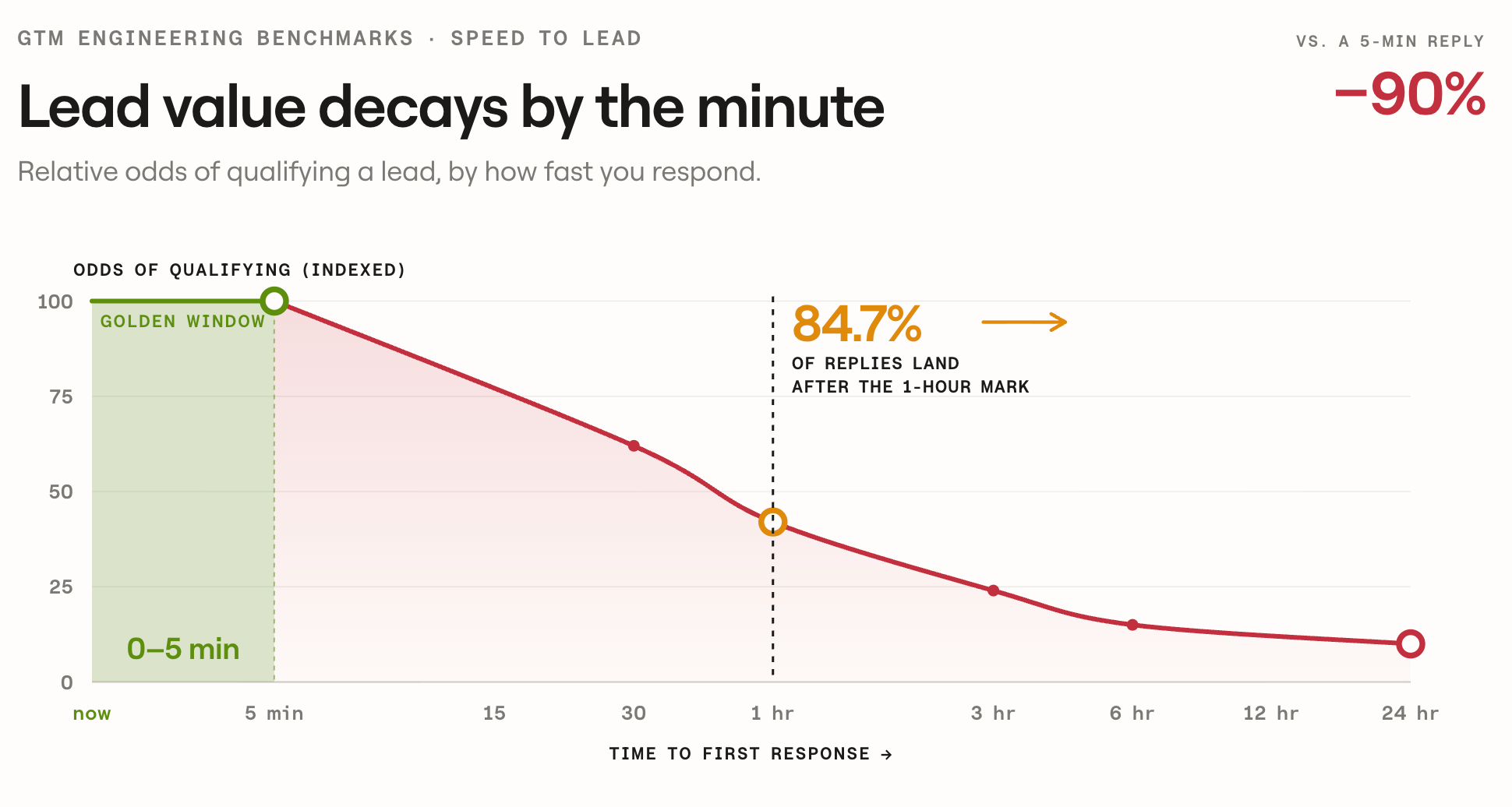
8. Speed to lead is more important than ever.
This is the difference between getting to the prospect before your competition. That prospect is filling out all forms at once and is coming in much more informed. Connection and qualification drop off faster than most realize.
This will be the first GTM Engineering Benchmark that I’ll be releasing.
9. AI hasn’t freed up anyone’s calendar.
If anything, everyone is more busy with higher expectations to produce more.
10. System thinking is an imperative.
Not only for building new types of GTM systems for your business. Think how you can build AI and agentic systems for your own productivity.
11. AI is coming for more labor vs. software budgets.
Salesforce isn’t going to be replaced by AI apps. Most don’t realize that enterprises only spend ~5.7% of annual revenue on software. AI will eat more labor budget than software. And, there’s much more value to build new types of software vs. risk replacing a stable system. The savings won’t compare to focusing on the labor budget.
12. Vibe coded apps are replacing GTM point solutions.
Lovable is replacing everything from CPQ (this one really surprised me) to customer onboarding portals, and even Google Slides for decks.
This points to GTM teams using a smaller number of vendors who provide infrastructure to build a fuller spectrum of capabilities. Cobbling together point solutions just leaves you with a fragmented stack.
13. GTM Engineering requires real key stakeholder buy-in.
Leadership needs to be open with rapid experimentation and trying new things. Sadly, there’s still many that are stuck in their ways.
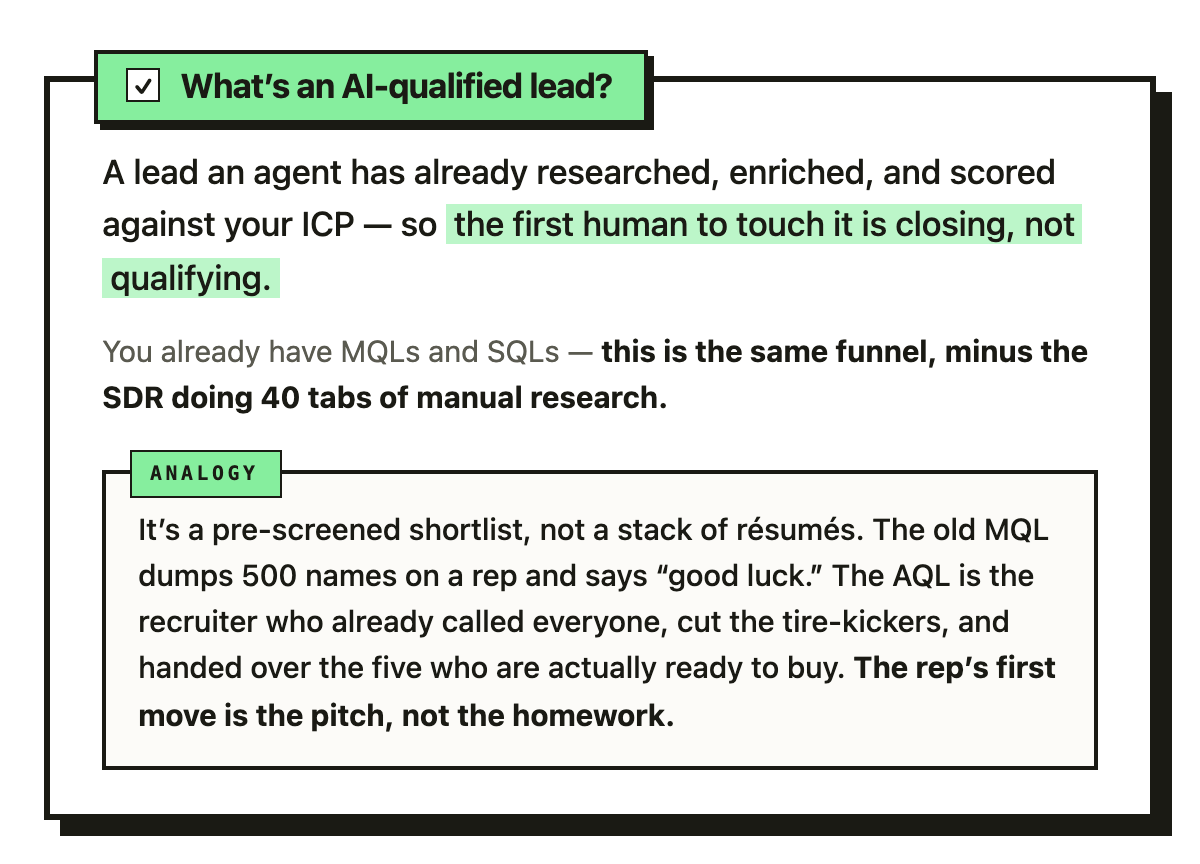
14. MQLs are getting replaced by AI Qualified Leads (AQLs).
Automated inbound and AI qualifying leads is one of the most popular Clay workflows we deploy for customers.
15. Enterprises are still solving foundational problems.
Data foundation
Automation
Sales rep workflows
Some skip to deploying agents before they get the data right and that’s key reason deployments aren’t successful or don’t produce ROI.
16. Data maturity is the first step in AI maturity.
Data foundation
Agents
Orchestrated agents
Self-learning systems
Each one builds on the prior.
17. Agents have started calling prospects.
I didn’t think this would happen or work (anytime soon), but that’s what the RevAI team at Monday.com has built. Agents call and follow up with hundreds of inbound prospects. Meetings are getting booked. Obviously, we hope this doesn’t move over to cold calling.
18. More powerful LLMs don’t necessarily give you better results.
Content is the code. Less powerful LLMs with the right context outperform more powerful LLMs without context.
More on how this plays out and how to improve in Clay —> Context Engineering 101 for Clay.
19. Agencies tout that Claude can replace Clay.
In reality, enterprises need security, governance, observability, and deterministic workflows. That’s hard to do if you’re vibe coding GTM systems. By the way, Anthropic is one of Clay’s largest customers.
20. On hiring GTM Engineerings:
You typically get 2 different personas. A great GTM Engineer will be able to learn the side because you need both:
Technical skills
Business context
21. Want to get AI-pilled? The most AI-fluent:
Start with curiosity.
Experiment daily to learn what's possible.
Start by selecting one repetitive workflow and figure out how to automate it.
Iterate on it (and the next ones) until you get it right.
Use AI as a sparring partner, not only as an answer engine.
Turn great outputs into skills for reusability.
Repeat steps A through F
22. AI disproportionately impacts higher performers.
Everything you engineer for sales reps will have a disproportionate impact on high performers compared to the bottom. AI won’t make you better at sales. You still need to be good - have the right mindset, motivation, curiosity, and so on. AI and GTM Engineering will raise the floor of the team, but the distribution won’t be even. This is important to keep in mind and for expectations
23. Building Clay tables isn’t the future in Clay.
Think more along the lines of infrastructure for building GTM systems. Data will always be at the center, but the future of what you build and how you build it will be different:
Clay MCP - use Clay from within your chat/LLM interface; Claude, Codex
Agents - example: continuously scores and prioritizes accounts based on new intelligence or signals.
Functions - turn workflows into functions you can call instead of building the workflow again.
Workflows - think 8n8 killer.
Skills - with Clay infrastructure (functions, workflows, data in the backend).
Apps - company specific apps built on top of the data / GTM infrastructure. Increasingly these are vibe coded.
Unified context layer - this is Audiences (just launched) that combines all of your 1st & 3rd party data
Learning loops
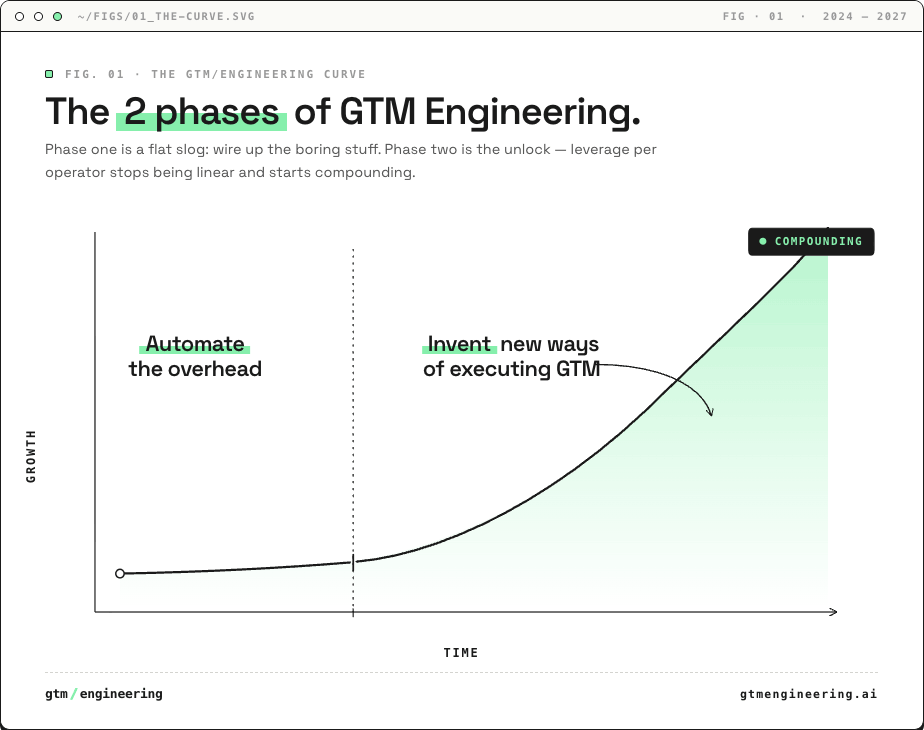
24. GTM Engineering generally has 2 phases:
The 2nd one is where you find real GTM Alpha.
25. Rep interfaces are dying.
Almost everything a rep logs into (except email, calendar, slack) will be replaced by doing work in Claude Cowork or Codex. Custom skills, apps, workflows, and orchestration via MCP to all of your systems. Voice will be the interface Cowork/Codex.
26. On building a career:
Get really good at building and share what you’re doing. Having a personal brand gives you leverage & increases your surface area for luck in business. Plus it accelerates connections. It’s helped me make plenty of good friends along the way.
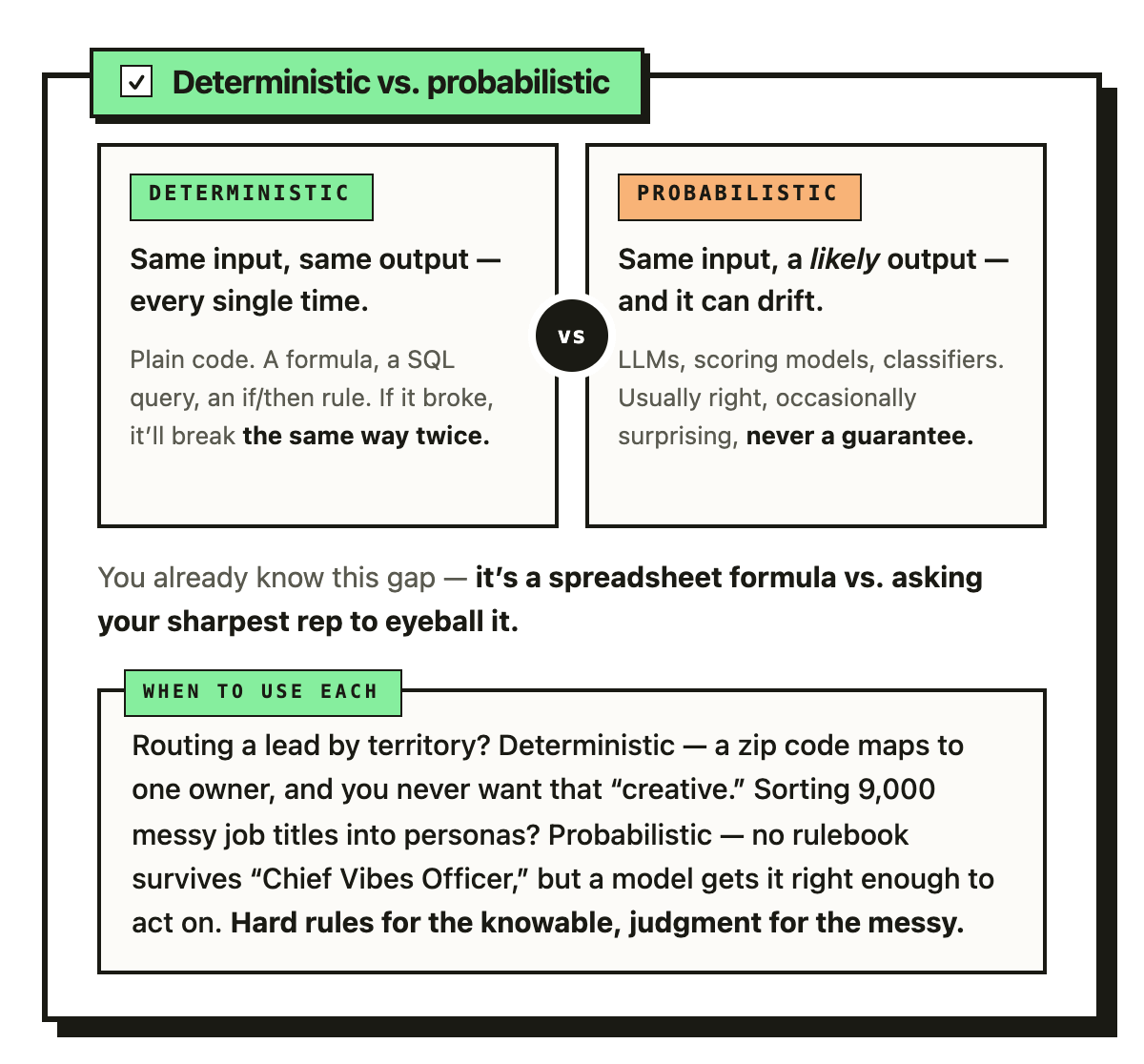
27. Consider deterministic vs. probabilistic.
Use deterministic logic to route and gate, probabilistic logic to enrich and personalize. Deterministic handles: “does this lead meet ICP criteria?” Probabilistic handles: “what’s the right angle to open this account?”
3 predictions for GTM Engineering
28. All components of GTM will be self-optimizing.
An agent will be responsible for analyzing the conversion rates of landing pages, running experiments, and then automatically adjusting the page based on the data. This loop repeats. Now think of everywhere this could apply:
Website design
Ad campaigns
Outbound prospecting
Marketing content
The list goes on… there will be learning loops built into all functions.
29. The hot new sales question will be:
“What is your labor budget and how much do you want to 1) reduce 2) move to software?”
The ratio of labor to software budgets will indicate how large the opportunity is.
30. The most important marketing KPI will be:
The frequency of product mentions in ChatGPT, Claude, Perplexity, and related AI answer engines.
AEO then becomes one of the most important skills to learn in GTM
31. Distribution and deployment are the moats.
Everything in-between can be replicated. But distribution and deployment require taste & judgement.
Both can’t be outsourced to AI.
Recent posts


Great article, Alex! The funny (and amazing) thing is that a year from now, everything you're mentioning in this article will already be in production and there will be 100 new things to talk about.
Hi Alex , would like to know more about the VPs slot to learn the skills from you . Here is my email id rohann71121@gmail.com