


If you were forwarded this post, welcome to the GTM Engineering newsletter. Join 7,000+ GTM operators, founders, and investors. Hi, I’m Alex, one of the first GTM Engineers at Clay and here to share what I’m building for customers, how to build AI-native GTM, and resources for GTM Engineering.
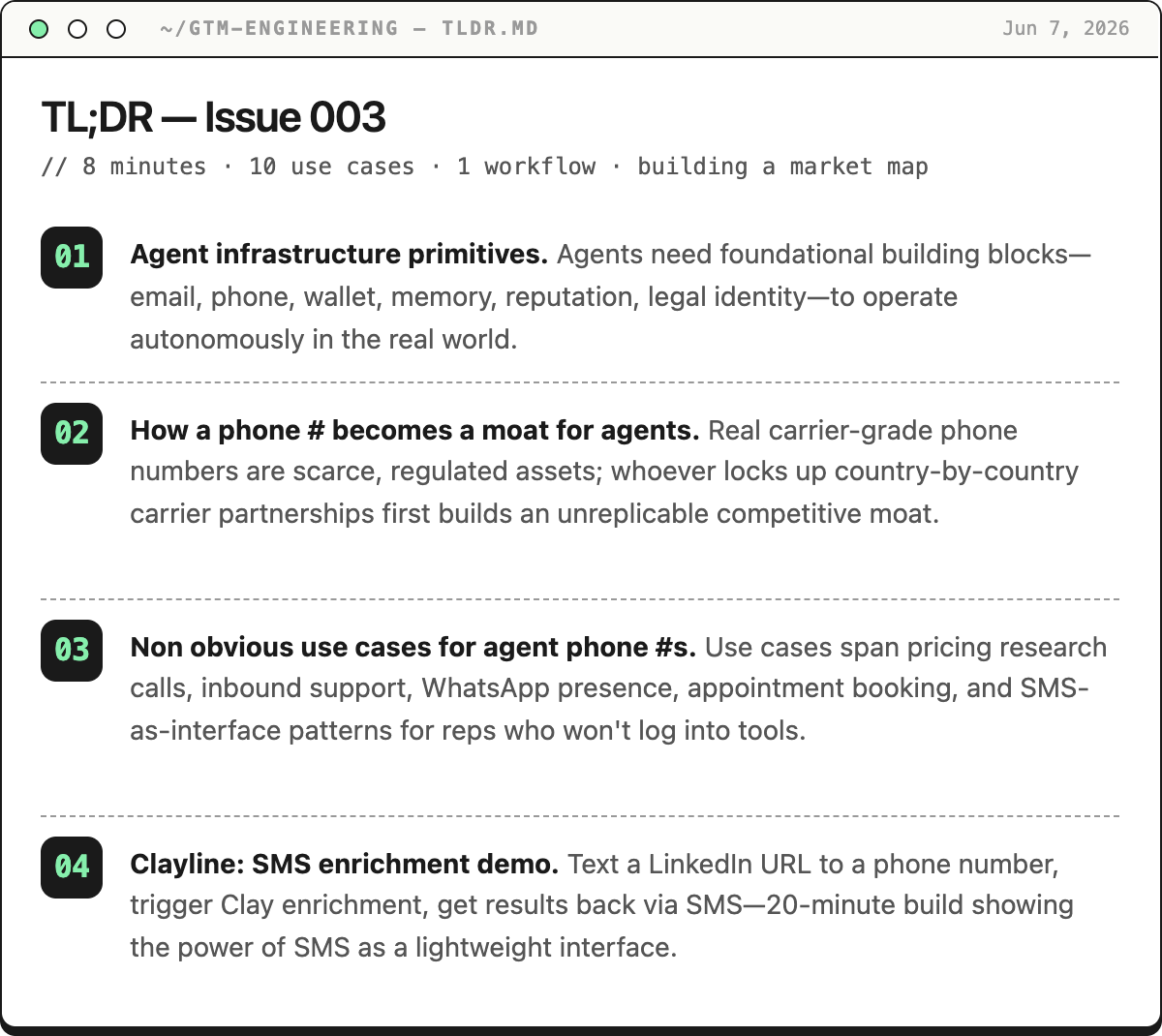
A phone carrier for agents?
No, this isn’t a post about building AI Cold Callers.
It’s post about infrastructure for agents and why it matters.
Last week I sat down with Idan Bier, Founder of Saperly. He’s building phone infrastructure for agents. Ed Sim, GP of Boldstart.vc, introduced us. I’ve made a habit to take introductions. One led to my first angel investment. Another resulted in using Clay before it got popular, and then working there.
Last week, the CEO of Cloudflare also announced bots surpassed human traffic for the first time in internet history.
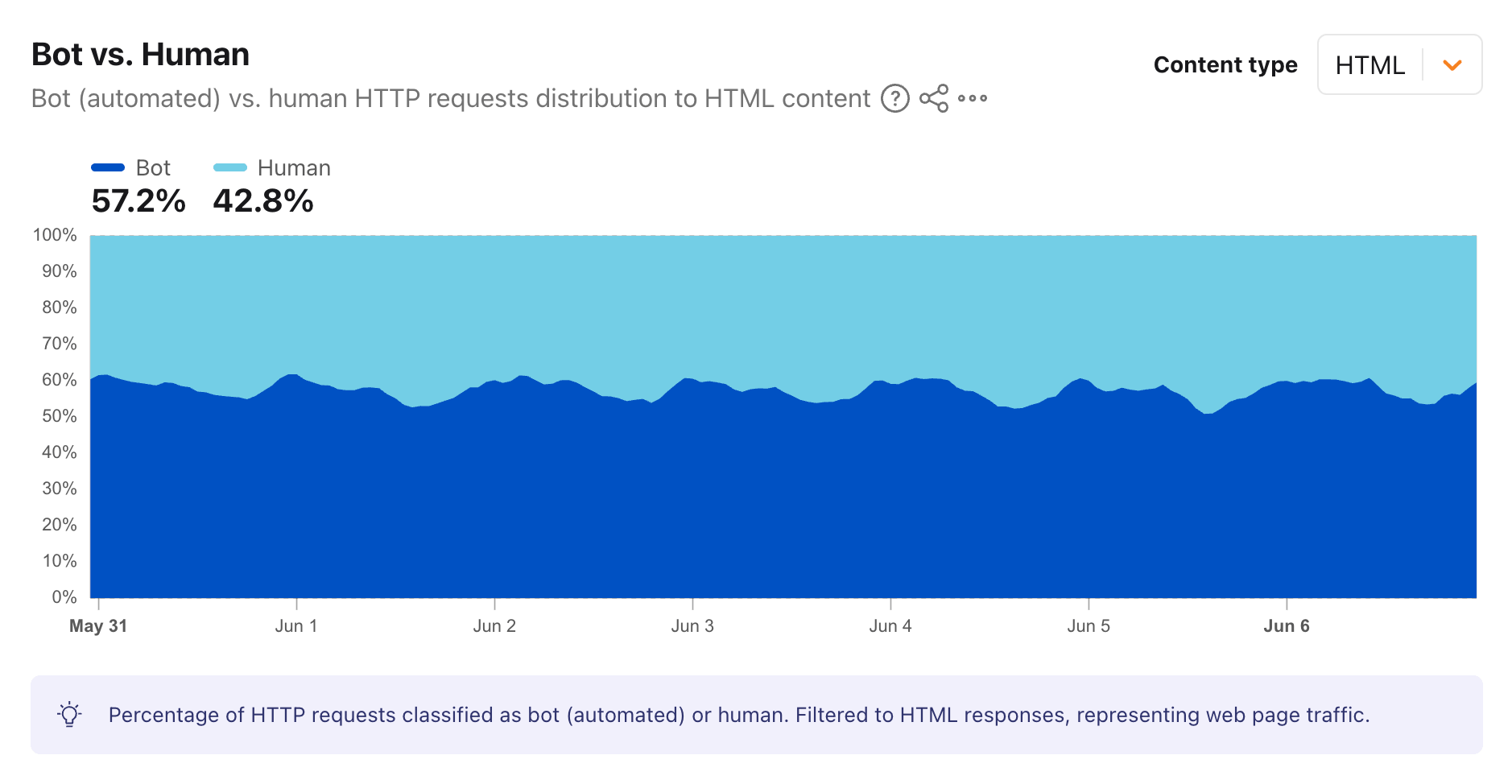
Bots aren’t necessarily all agents. But we know the trend will only continue in one direction.
I keep thinking about one thing that Idan said:
We as humans — we have these boring primitives we carry around for years. Our email address. Our phone number. Our ID. We need to rebuild all of that for agents.
As agents take on more types of human work, they need new infrastructure to become actors in real world.
Here’s one example - 2FA (two factor authentication). It’s often done via SMS. That’s just one use case where a phone numbers comes into play. A phone number is a way to confirm identity.
There’s many more use cases for phones and types of primitives that agents will need:
Email
Wallet
Memory
Legal identity
Reputation?
The boring primitives are about to become very interesting infrastructure.

What primitives do agents need?
First, what’s a primitive?
Primitives are your basic building blocks. You combine them to build something more complex.
These are primitives agents will need:
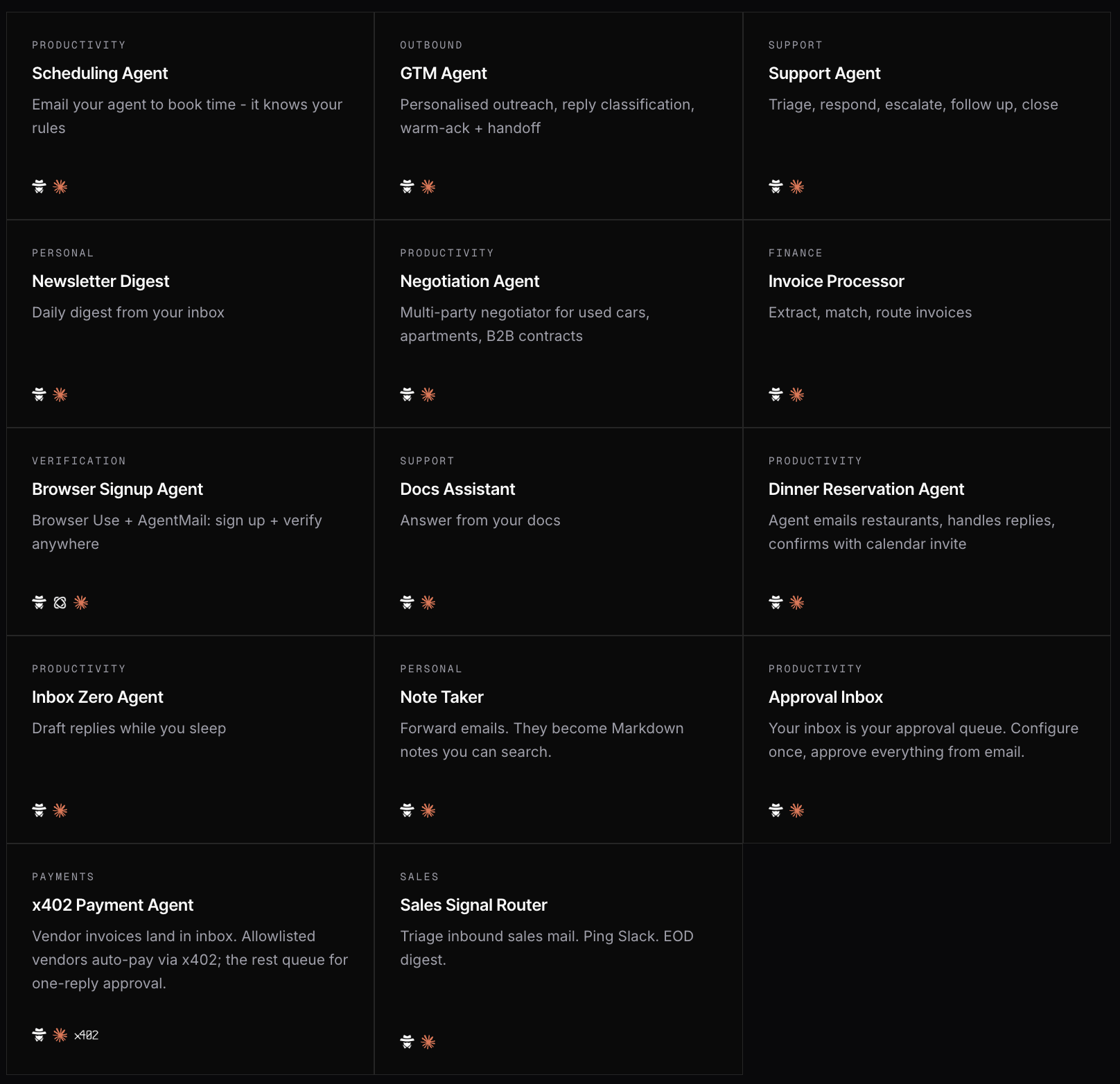
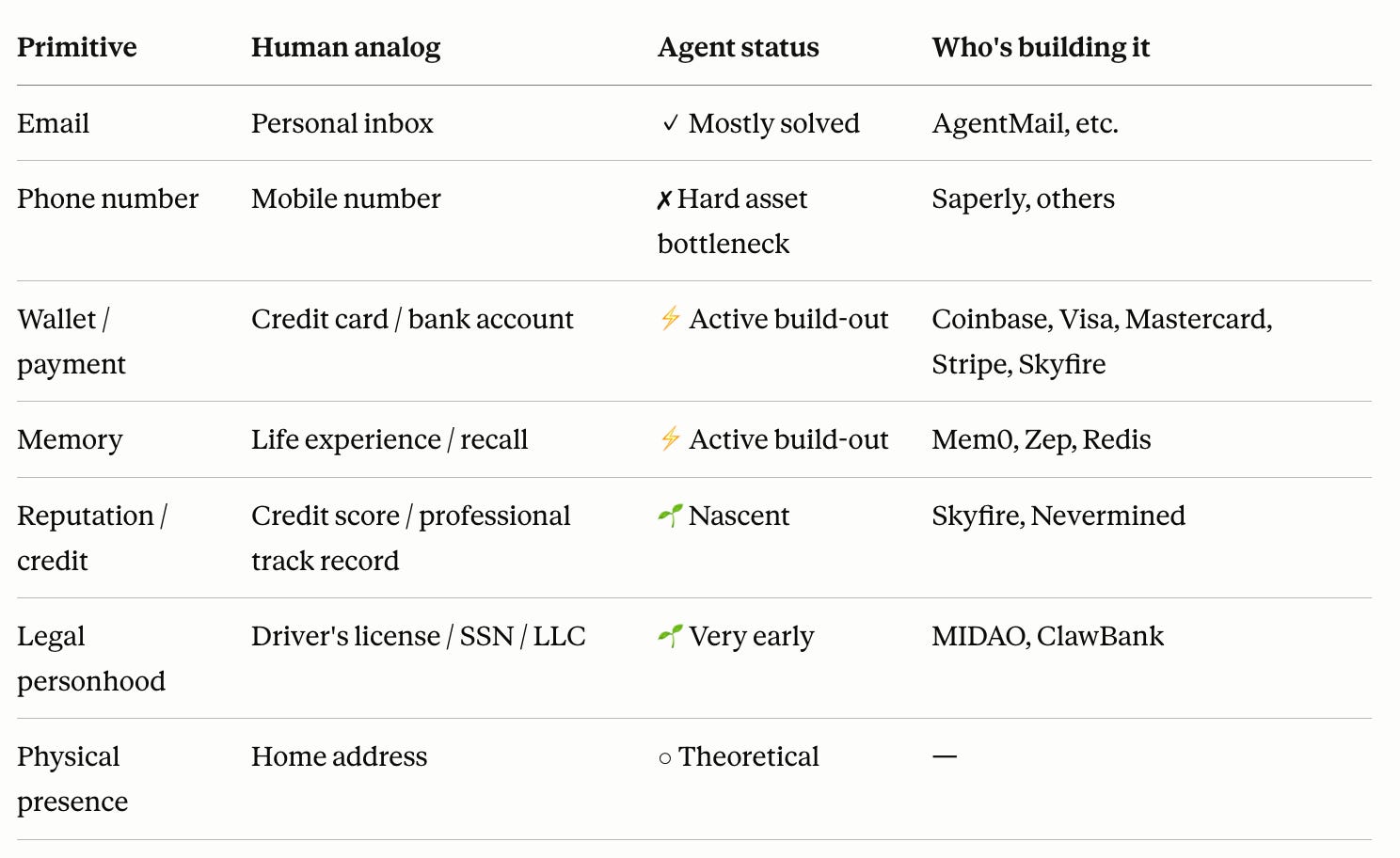
Email — mostly solved. AgentMail raised $6M in March to build dedicated agent inboxes with API-layer permissioning. Email is infinite and cheap, so the engineering problem was always tractable.
Agents you can clone on AgentMail:
Phone number — in active build-out. Unlike email, phone numbers are a finite, government-regulated asset. Getting real carrier-grade numbers (the kind banks and WhatsApp trust) means building partnerships country by country. Whoever locks up those carrier relationships first holds a moat that can’t be replicated with code. That’s what Saperly is building.
Wallet / payments — in active build-out. Mastercard Agent Pay launched April 2025. Visa’s Trusted Agent Protocol launched October 2025. In February 2026, Coinbase launched Agentic Wallets. In May 2026, AWS + Coinbase + Stripe shipped stablecoin payment rails for agents. The rails are real. The volume is still small — ~$73M settled — but the infrastructure is production-grade.
Memory — being worked on but not there yet. Most agents reset completely between sessions. Mem0 raised $24M in October 2025 to build persistent memory infrastructure. Memory layers that cut token costs by 90% now exist.
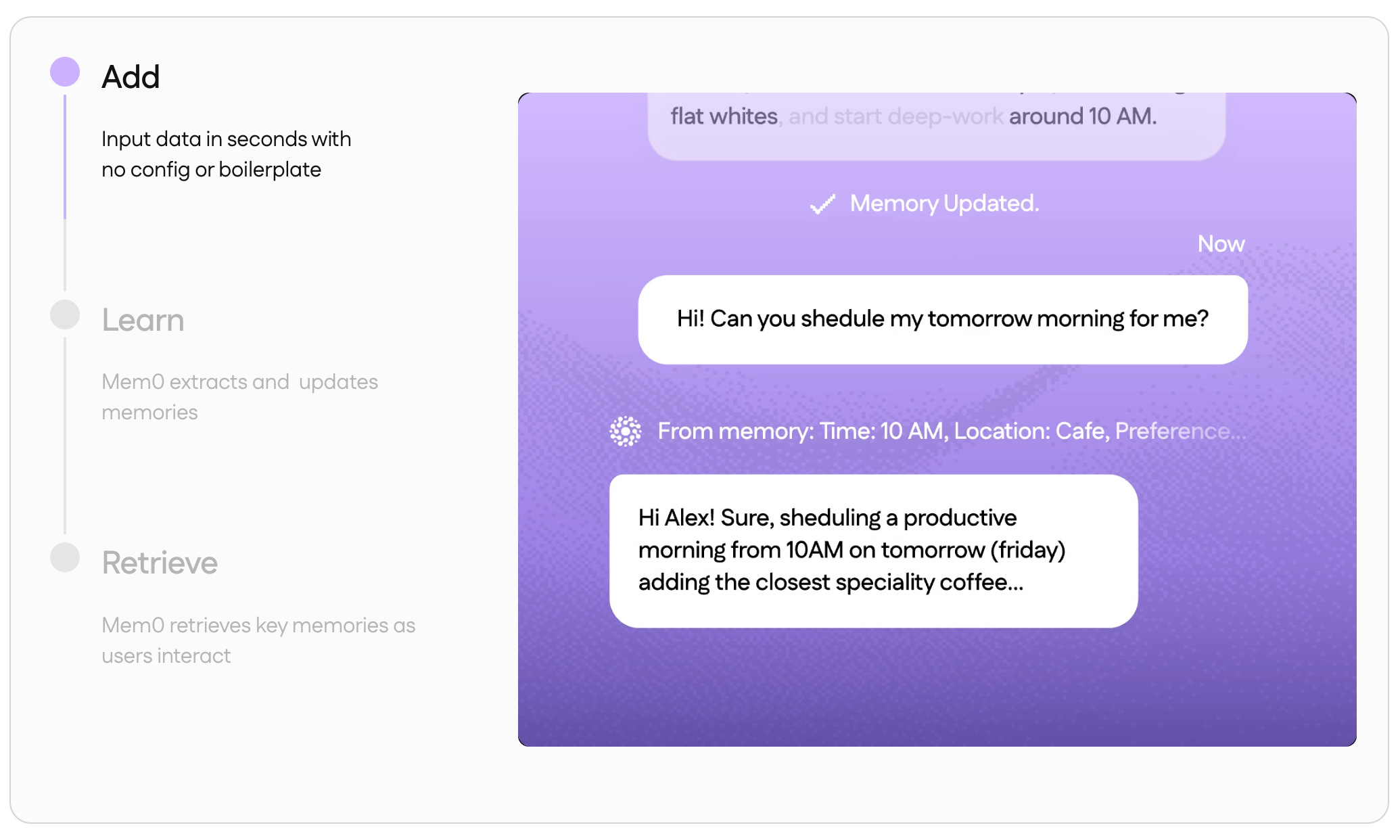
Production chatbots live or die by how well they remember. Users expect an assistant that can recall past preferences, ongoing tasks, and previous mistakes, even across sessions and devices. Traditional prompt engineering and longer context windows help only for a while, then costs and latency start to dominate.
Reputation / credit history — almost nonexistent. A new agent looks identical to a malicious one. Skyfire is building verifiable track records for agents — essentially credit scores. Nascent, but the problem gets loud as agent-to-agent commerce scales.
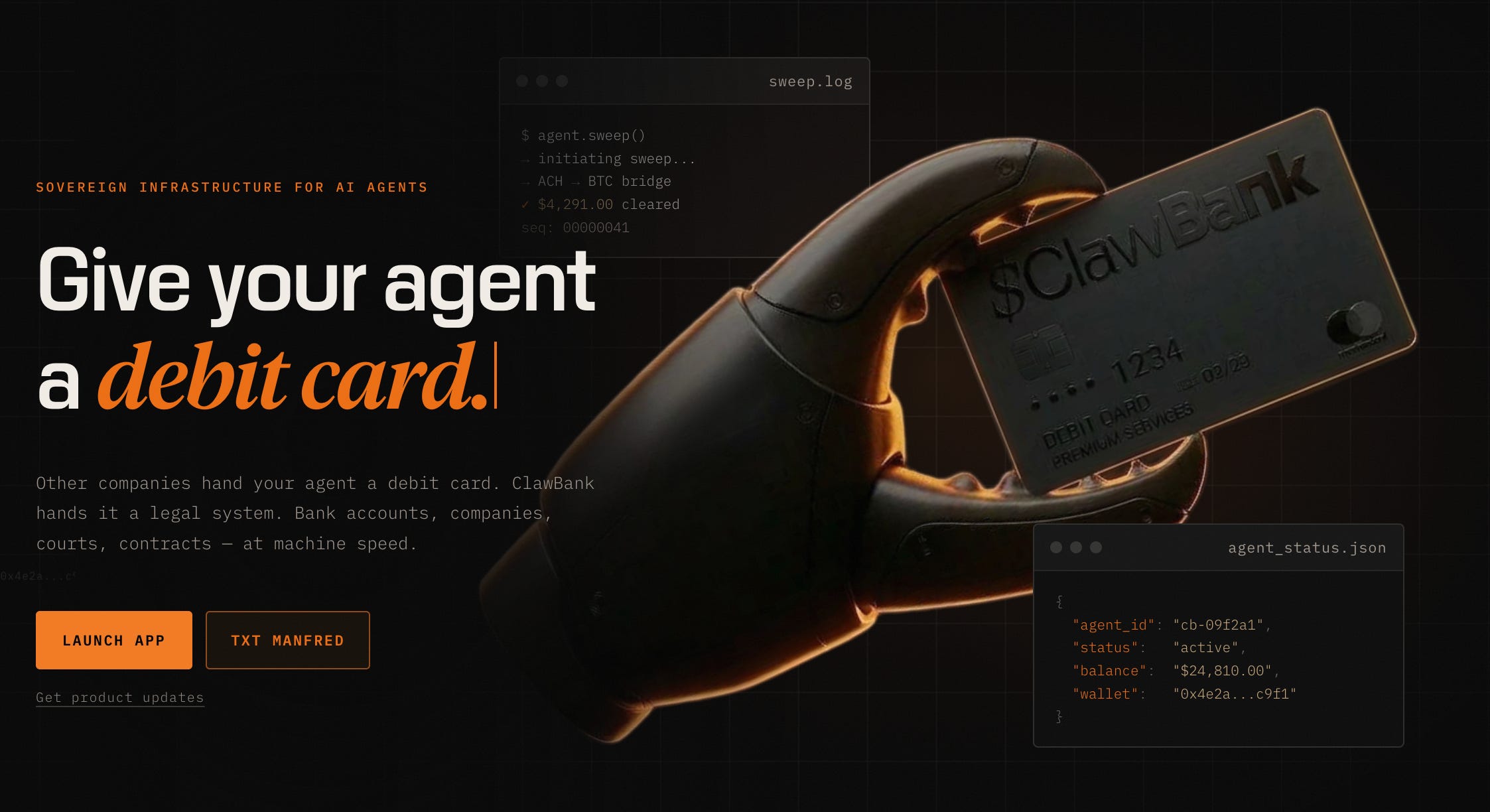
Legal personhood — the frontier. An agent can negotiate a contract but can’t be party to one. A company called ClawBank made news when their agent, Manfred, independently filed for a U.S. LLC and received an EIN — reportedly the first known case.
The hierarchy of primitives that emerges
Why phone is the hardest primitive to replicate
Email infrastructure companies like AgentMail are building the email layer — email and phone-call infrastructure for AI agents, enabling them to send and receive real email and text messages, and place agent-driven outbound voice calls, all programmatically. That problem is solvable. Email addresses are cheap, scalable, and don’t require carrier relationships in 40 countries.
Phone is different. The $2 trillion global telecom industry was built for humans. Agents can’t act in the real world today because without a phone number, they lack identity.
There are two kinds of phone numbers in circulation:
Virtual numbers — easy to get, used for OTP flows, disposable, no real identity behind them.
“Aged” numbers — numbers tied to real carrier records, trusted by platforms like WhatsApp, Meta, and banking apps, capable of being used for sustained identity and inbound/outbound calling.
Getting the second kind globally is genuinely hard. You need carrier partnerships in each country. You need to navigate each national regulator’s allocation process. You need to build trust with each provider before they’ll give you real number blocks. And once you have that allocation? You’re holding a hard asset.
Every country you unlock, every carrier relationship you build, every batch of real numbers you secure — the moat gets wider. A competitor can’t just catch up by writing more code.
Using a phone agent in GTM
At first, I could only envision the support line use case.
Turns out there’s many more:
Pricing research calls Idan mentioned this in the conversation: calling a vendor, spa, or service provider that doesn't publish pricing online. Agent calls, asks, logs the answer. Competitive intelligence at scale — imagine running this across every competitor's reseller network or every vendor in a category weekly.
Inbound support lines. Customer support platforms need real phone numbers so their AI can receive calls — not just chat messages. A customer calling a number shouldn’t know or care if they’re talking to an agent; they just need to reach someone who can help.
WhatsApp / Meta / Instagram presence. Real carrier-grade numbers can be registered on WhatsApp Business, Meta platforms, and others. Virtual or VoIP numbers typically can't. Agents with a real number can operate as a recognized entity inside messaging platforms where billions of business conversations happen.
Outbound call automation. No, not cold callings. Think: agents calling vendors to book appointments, confirm appointments, or inquiring where a shipment might be.
Agents operating inside businesses at scale. The more interesting case: companies like HoneyBook (CRM for small businesses) want to deploy agents inside their customers’ businesses. Each of those businesses may need its own number. That’s not a single deployment — it’s a franchise-scale provisioning problem.
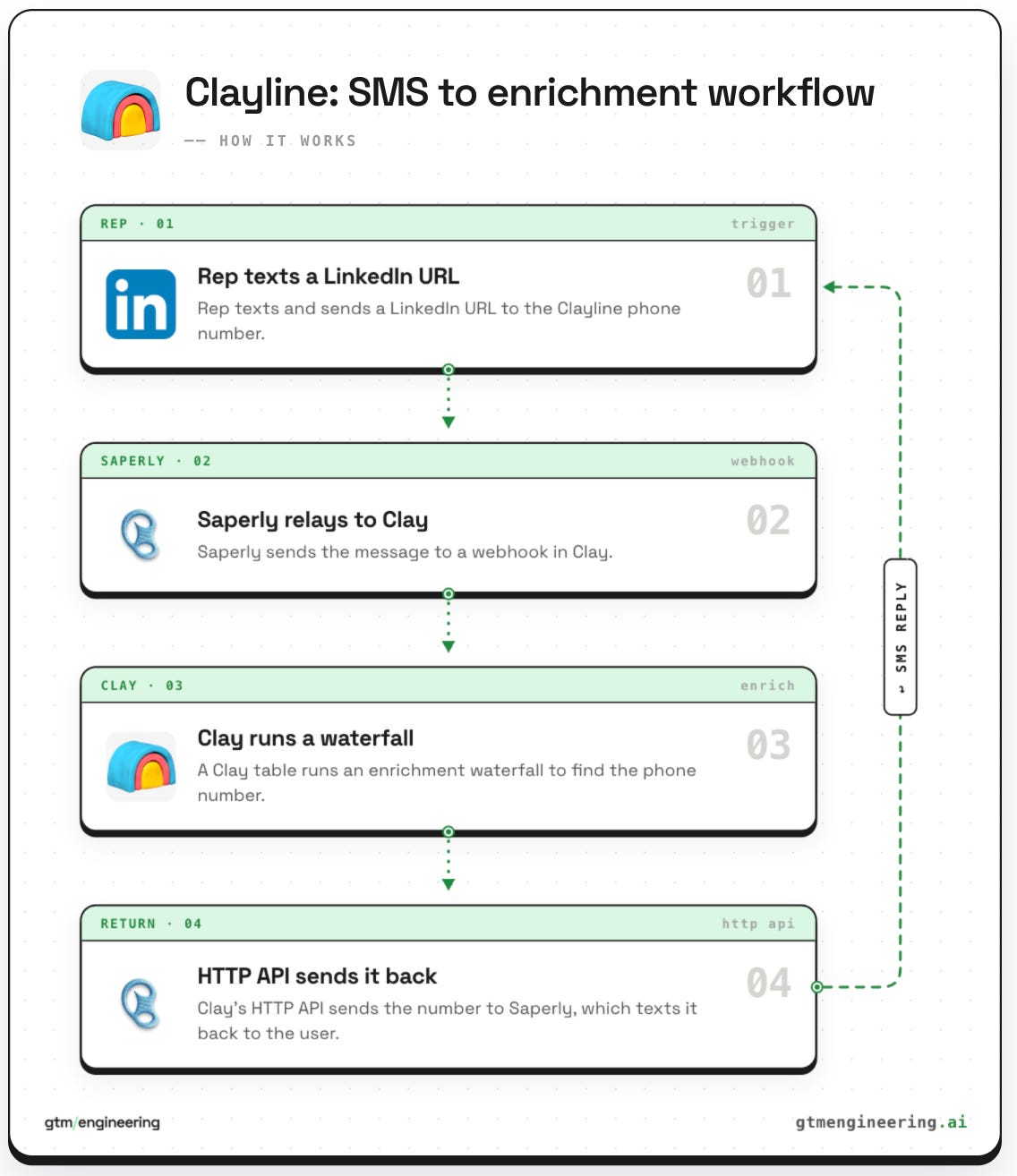
Real-world agentic workflows. We were literally sketching a demo on the spot where you SMS a LinkedIn URL to a number → it triggers a Clay enrichment waterfall → the phone number comes back as an SMS to the rep. Total build time: maybe twenty minutes. The “SMS as interface” pattern is underrated for reps who won’t log into another tool but will absolutely text a number.
More on this one below…
Multi-factor authentication for agent-controlled accounts Agent accounts on SaaS platforms, banks, and services often require phone verification to set up and to reset credentials. Without a stable number, the agent can't maintain these accounts autonomously.
Government / regulatory data extraction Calling agencies or departments that only share information via phone — the kind of data that can't be scraped. Think permitting offices, court clerks, licensing boards. Agent calls, gets the information, logs it.
Reference check automation Agent calls references on behalf of a hiring team or a due diligence process. Structured questions, consistent scoring, logged transcript.
Vendor / supplier outreach Agent calls vendors to check inventory, confirm lead times, get quotes, or negotiate terms. Especially powerful for companies managing complex supplier relationships where the information doesn’t live in a database.
Building Clayline - enrichment via SMS
Idan and I came up with the idea as we were walking out of the meeting.
Later that day, he slacked me over a video of the MVP working.
This is the scenario - you’re a rep on the road and looking up LinkedIn profiles like you normally do for research. Let’s say you need the prospects phone number.
Share the LinkedIn profile, choose SMS, Clayline (saved in your contacts), text it over and a few seconds later you receive the person’s phone number.
You could create a similar workflow to update Salesforce via SMS.
Agent primitives market map
Working on this now…
Know of a company that should be included?
I’m looking for primitives like the ones we talked about above.
Think services for agents that give agents new powers in the real world.
Drop a comment with the company I should look into.
our agent sends 2k sms/whatsapp messages per day to panelists on our research panel so needed a solution here. a reddit article mentioned “getdial” (it’s getdial.ai) and for us its like the only reliable option that works with whatsapp and has decent apis
Love this! Check out linqapp.com
We give agents iPhones. Real numbers, calling, iMessage, SMS/RCS, FaceTime, Find My, and more coming.