


New here? Hi, I’m Alex Lindahl, Creator in Residence at Clay. You can find me on GTM Engineering YouTube channel, X where I post daily GTM plays, and r/gtmengineering where I host weekly AMAs. Connect with me on LinkedIn.
Join 9,000+ GTM operators from OpenAI, Reddit, a16z, Figma and others who subscribe to learn how the fastest growing companies use AI in GTM.
In this newsletter:
AMA w/ OpenAI’s former Head of GTM Systems
4 BIG announcements from Sculpt
How GTM learning loops happen today
What is loop engineering (aka learning loops)
5 stages of a GTM learning loop
3 types of Memory for loop engineering
5 GTM examples of learning loops
Reddit AMA with OpenAI’s Head of GTM Systems
OpenAI’s former Head of GTM Systems, Keith Jones, is joining us tomorrow!
Drop your questions on this thread. The AMA will be this Thursday Oct 15 at 12PM EST on r/gtmengineering.

4 big things you should know from Sculpt
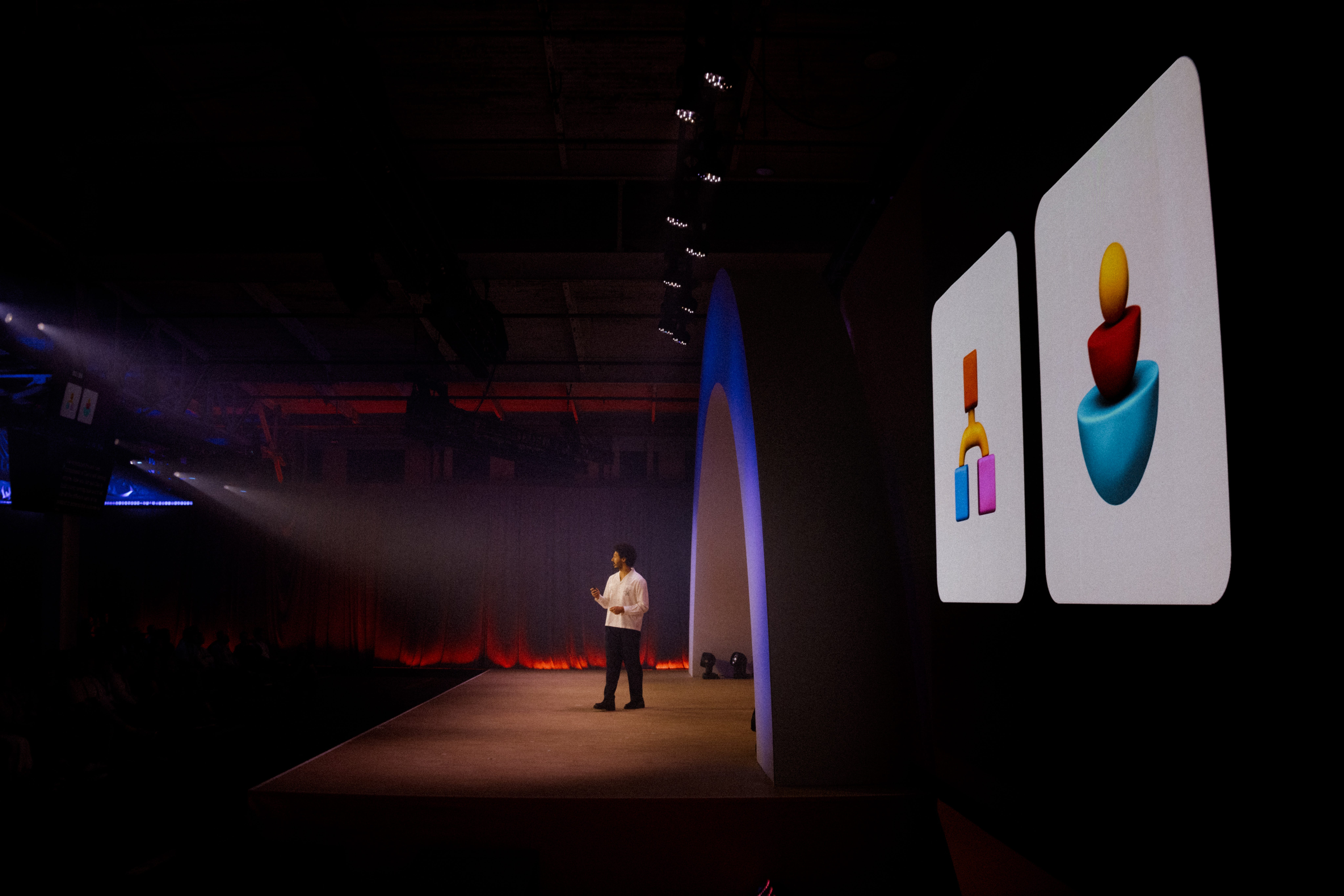
We announced 4 things (the 4th is the most important:
Workflows
Global Clay agent
Inbound SDR agent
Self-learning revenue engine
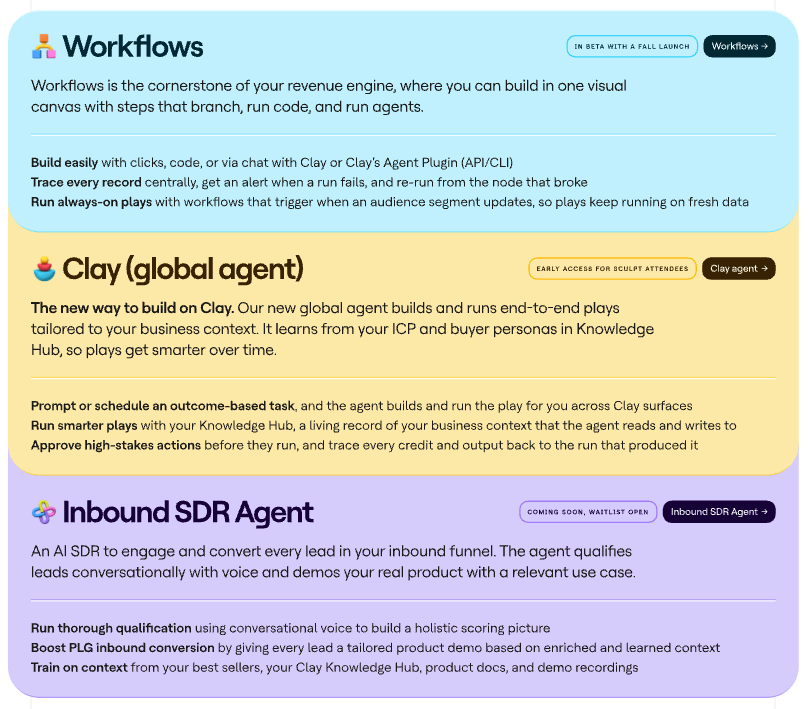
The primary goal of the inbound SDR agent is to increase your speed to lead. Yours might be slower than you think. Test your speed to lead here
Self-learning revenue engine
This is the future of Clay & GTM. I believe these types of systems will counter moat erosion and be a key way teams gain a competitive edge.
Executing campaigns is easier and faster than ever. Teams get their real competitive edge — or GTM alpha — from how well they can learn. The teams that grow fastest get better with every campaign. The results of each campaign influence changes that raise the quality and conversion of the next.
Learning at that pace takes a self-learning revenue engine. A single system needs to be able to act on the full picture of your existing customers and your addressable market. It then needs to be able to learn from the results of its actions to improve: how should you adjust plays? What plays should you try for the first time? How can you expand your ICP? - Building the self-learning revenue engine.
Self-learning comes from loop engineering in software development. We’ll dive into that in more detail.
Satya Nadella, CEO of Microsoft, said on X that the future of digital systems is essentially loops between human capital & token capital.
This is the first time we can create a real cognitive loop between people and digital systems… Every company is going to have to build what I think of as human capital and token capital. Human capital comprises the knowledge, judgment, relationships, ingenuity, and pattern recognition of its people, while token capital is the firm’s AI capability it builds and owns. - Satya Nadella, CEO of Microsoft
Learning loops already occur in GTM today
They are just slow.
Think about QBRs. They include reflections of the past quarter to apply learnings to the next one.
The same thing happens with outbound campaigns. Only manually, and not very scientifically. SDRs review email campaign performance, repeat what works, and maybe try something new.
Similar learnings happen in performance marketing, customer success teams, marketing campaigns, and in almost every corner of GTM.
Humans do the learning, then update the system.
We’re now moving into a world where the system learns and then updates itself.
We call this self-learning in GTM. In software it’s called loop engineering.
What is loop engineering?
Boris Cherny, creator of Claude Code, famously said
I don't prompt Claude anymore. I have loops running that prompt Claude and figuring out what to do. My job is to write loops.
Andrew Ng explains in more detail:
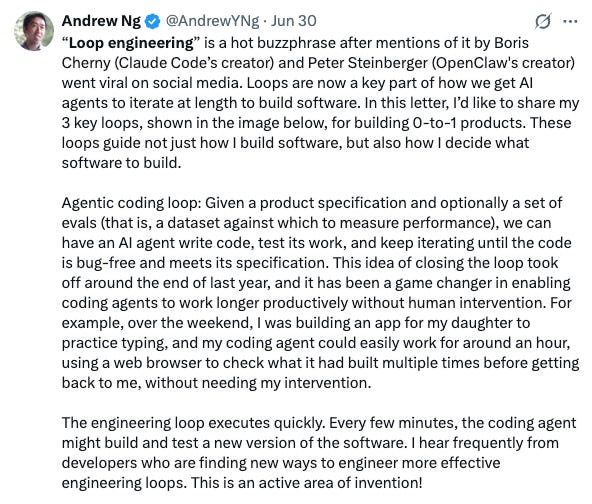
It becomes easier to understand loop engineering when we compare it to prompt engineering.
A prompting workflow looks like the following (most of us are here today):
Prompt → review response → you refine → prompt again
YOU act as the feedback loop
YOU are also the bottleneck
You might have to repeat that process many times before you get to the goal.
Loop engineering goes beyond prompt engineering. It takes the human out of the iteration process. Instead, you write a loop. AI iterates until it achieves the desired outcome.
IBM defines loop engineering as the following:
Loop engineering is the practice of designing agentic workflows, or loops, that iteratively guide AI agents toward completing user-defined goals with minimal human intervention. Rather than require human prompting at every step, agent loops enable agents to dynamically act, observe, make decisions and iterate until a task is complete.
For developers, loop engineering reframes their role away from prompting AI agents toward one in which they design automated systems that prompt, check and guide agents. Within a well-designed loop, an agent is able to reason, act, review the outcomes of its actions and adjust its subsequent actions accordingly.
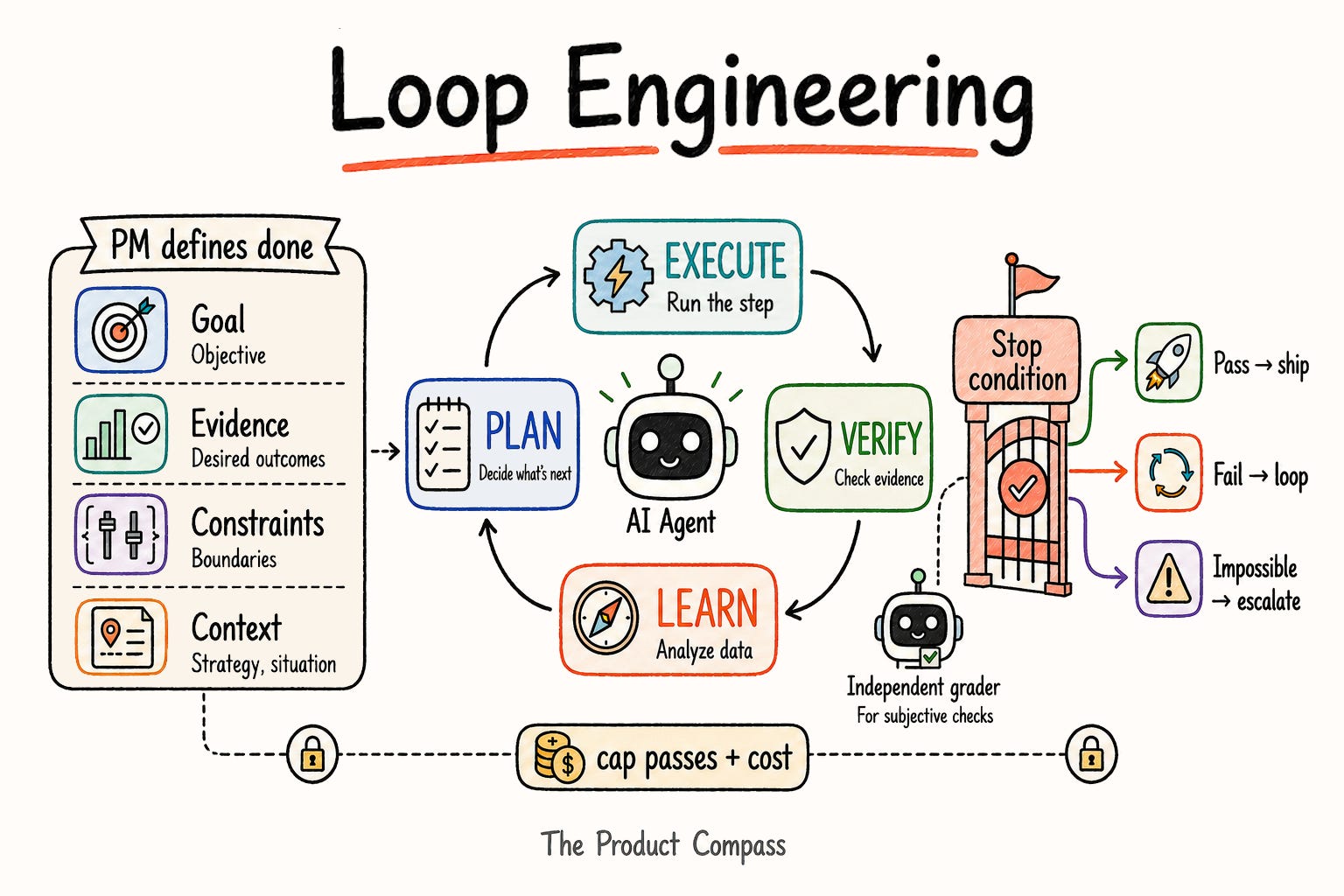
A loop engineering workflow looks like the following:
Provide a goal → agents act → verifies its own work → corrects → repeats until done
The SYSTEM is now the loop
YOU engineer the system
Here’s a visualization from the Product Compass newsletter to help you see it.
Great post for more on the topic:

The future of GTM is applying loop engineering to everything we do.
There’s 5 stages of a GTM learning loop
Learning loops can apply to anything in GTM where there’s an action, observable data, and desire to improve the play/system.
There’s no standard definition, but these are the general stages and mapped to a GTM example.
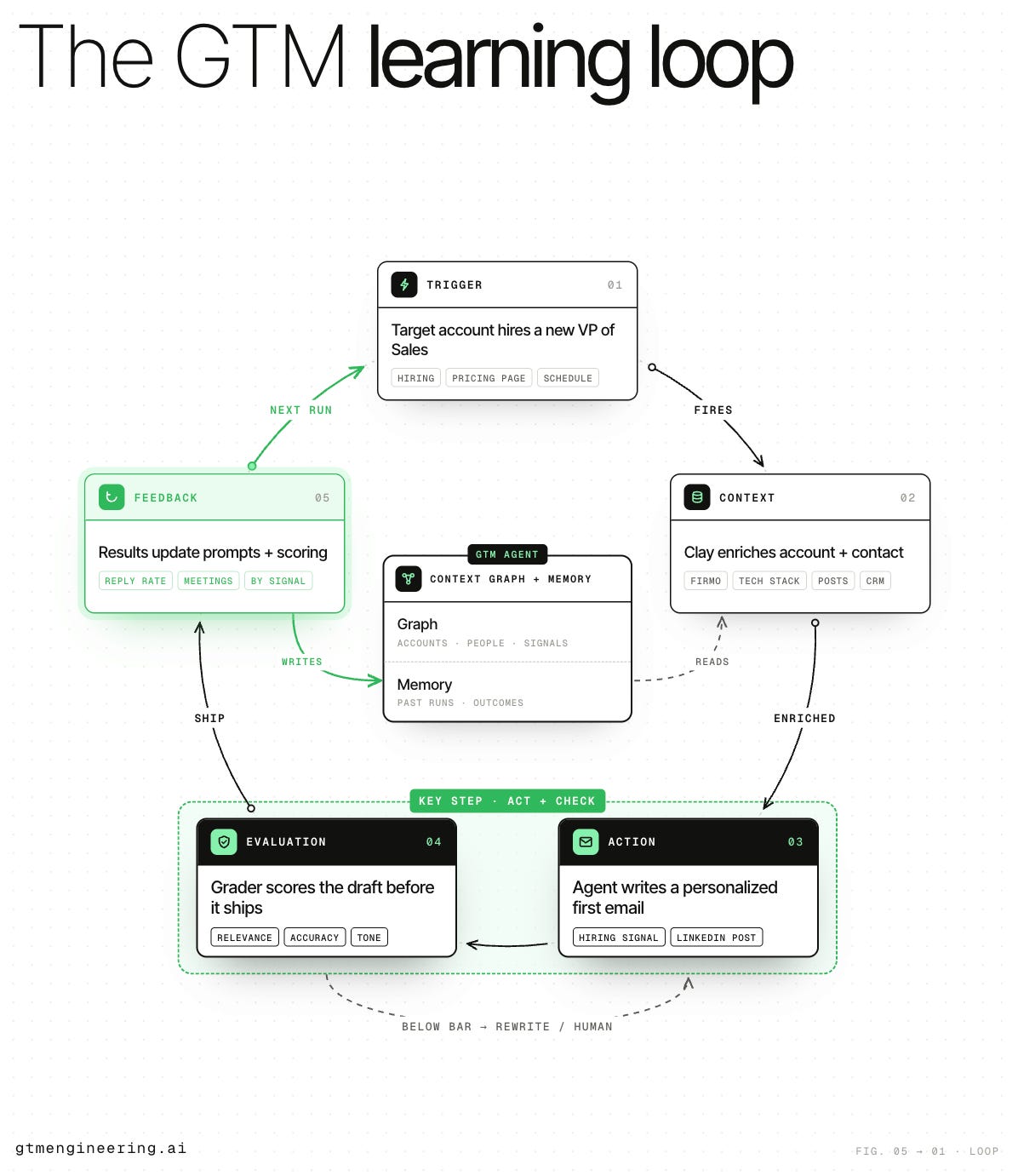
Stages mapped to a GTM loop (for prospecting):
Trigger. This is what starts the loop, like an event, a schedule, or a signal. In GTM, that could be a target account hiring a new VP of Sales or visiting your pricing page.
Context gathering. The agent pulls the data it needs before acting. Here, Clay enriches the account and contact with firmographics, the tech stack, recent posts, and CRM history.
Action. The agent does the work. It writes a personalized first email based on the hiring signal and the person’s recent LinkedIn post.
Evaluation. The output gets checked against clear criteria before it ships, by a rubric, a second model, or a human. A grader scores the email on relevance, accuracy, and tone, and anything below the bar gets rewritten or sent for human review.
Feedback and iteration. Real-world results flow back to improve the next run. Reply and meeting rates by signal type update the prompts and scoring, so hiring signals that book meetings get prioritized and weak ones get dropped.
The key idea is that stages 4 and 5 make it a loop rather than a one-shot automation, because the system gets better on its own over time.
One of the reasons I love Grok Bot is because it has built in memory. That enables you to build mini self learning systems. An example of this is my hook generator I talk about in this post:

Loop engineering needs memory to work
Memory is the piece that lets the loop carry what it learned from one run into the next, so it doesn’t start from scratch every time. It usually sits next to feedback, or works as a sixth stage feeding back into context gathering. It comes in three kinds:
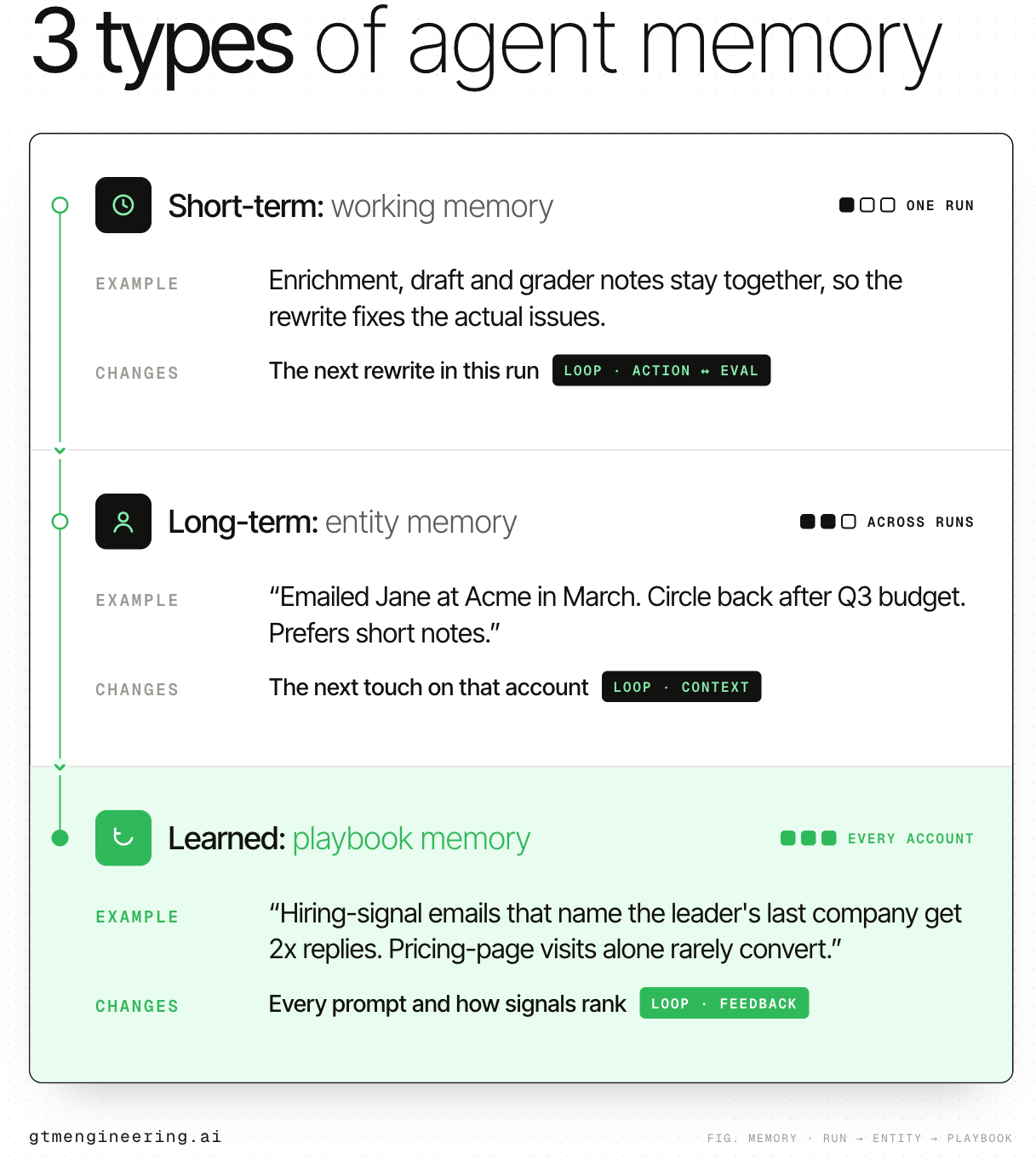
In GTM terms, memory is the difference between an agent that sends a good first email and one that runs a smart sequence over months. Your CRM, Clay tables, and call notes are its long-term memory, and the reply and meeting data are its learned memory. Without memory, the feedback stage has nowhere to write to.
There’s 2 ways this will happen in Clay:
Audiences (aggregates 1st & 3rd party data. you get up to 600 fields)
Knowledge Hub (this is where you’ll store your business context)
Where else are we seeing GTM loops? There’s several starts that are providing solutions in different areas.
5 examples of GTM learning loops
1. Lovable: AI-driven CS risk & opportunity engine
What it is: A customer success platform that analyzes real-time account activity to suggest proactive recommendations for reps.
How the loop works: AI agents evaluate usage signals to generate next-best-action recommendations $\rightarrow$ Reps execute actions and log feedback $\rightarrow$ The agent adjusts its scoring model based on rep inputs and account outcomes.
Key result: Keeps success teams focused on high-conviction risk and expansion signals while continuously improving action accuracy.
Check out this 5 min demo & explanation:
2. Grok Bot & Clay: automated outbound campaign optimization
What it is: A daily automated routine using Grok Build CLI to test and refine outbound sales messaging.
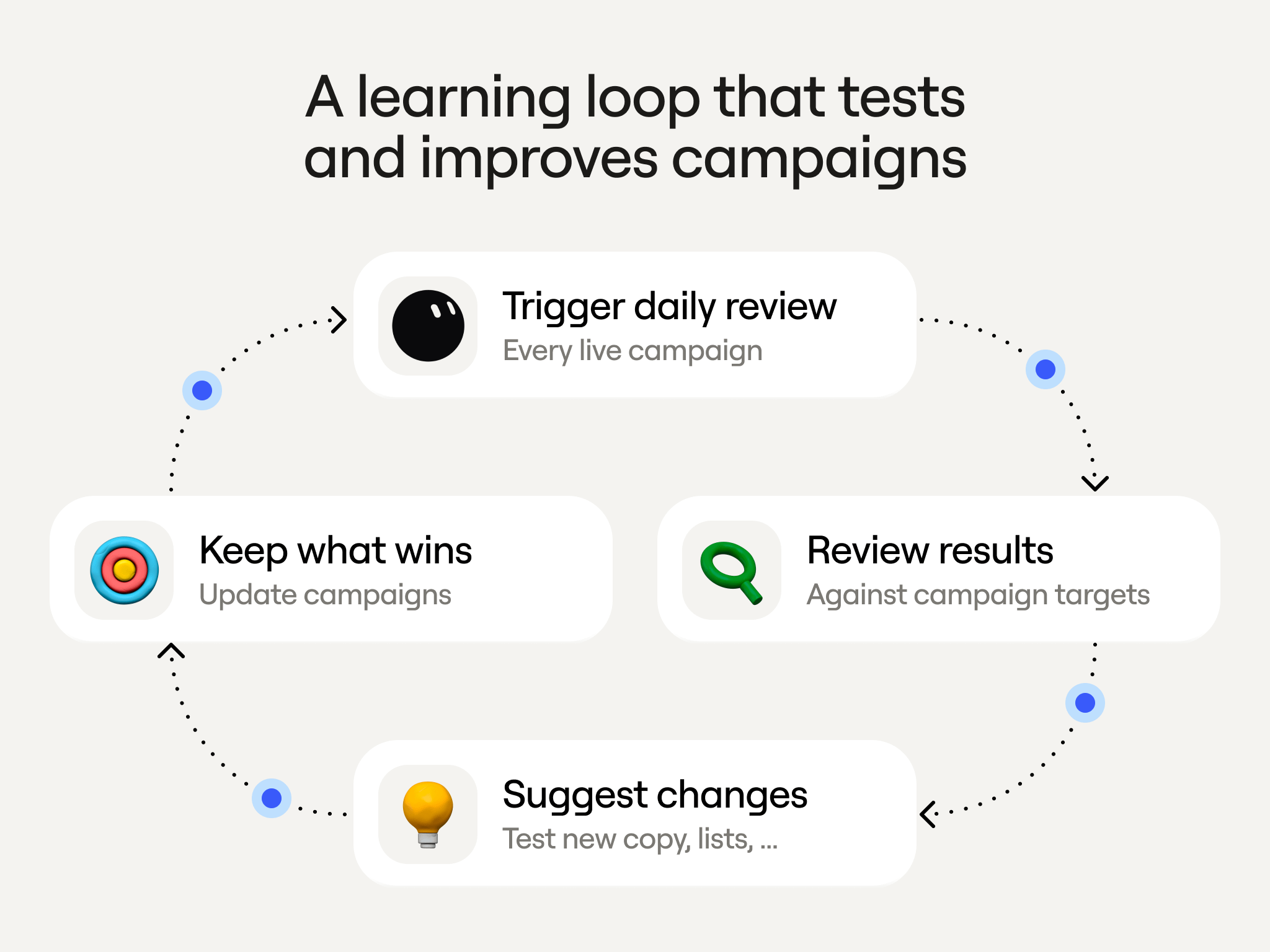
How the loop works: Daily scripts audit live campaign response rates against benchmark goals $\rightarrow$ The system flags underperforming messaging or targeting filters $\rightarrow$ It generates and deploys updated copy variations to re-test.
Key result: Automatically prunes low-performing sequences and scales winning copy adjustments without manual SDR intervention.
Every day, a Grok Bot routine reviews all of Eric’s live campaigns. It compares each one to its positive response target, and then recommends changes. It runs on Grok Bot’s own computer through the Grok Build CLI, a separate xAI coding tool that comes with more usage than Grok Bot. The daily instruction is roughly:
“Here is all the messaging we are allowed to use for each customer, and all the list filtering we are allowed to do. Run through their campaigns, and for any campaign that is not hitting its positive response target, suggest improvements.”
It comes back with specific suggestions, such as tightening the list for one campaign or replacing copy that isn’t resonating in another. The loop also runs tests. - How to use Grok Bot & Clay for GTM Campaigns
3. Laurence: autonomous Amazon ad management
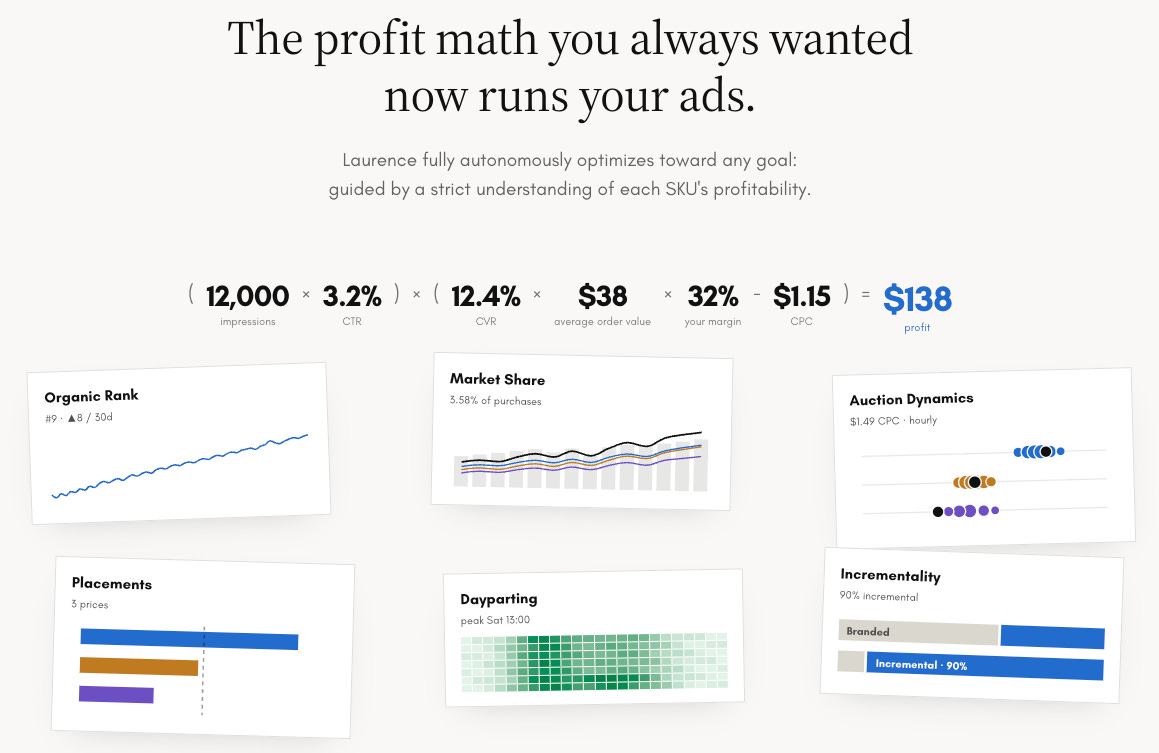
What it is: An AI optimization engine built specifically for Amazon advertisers to hit dynamic profitability targets.
How the loop works: Continuous tracking of campaign performance metrics $\rightarrow$ System dynamically recalculates expected ad value relative to target goals (e.g., lower CAC) $\rightarrow$ Real-time bid and placement adjustments are made automatically.
Key result: Reduces customer acquisition costs by continually fine-tuning ad spend allocation toward top-converting segments.
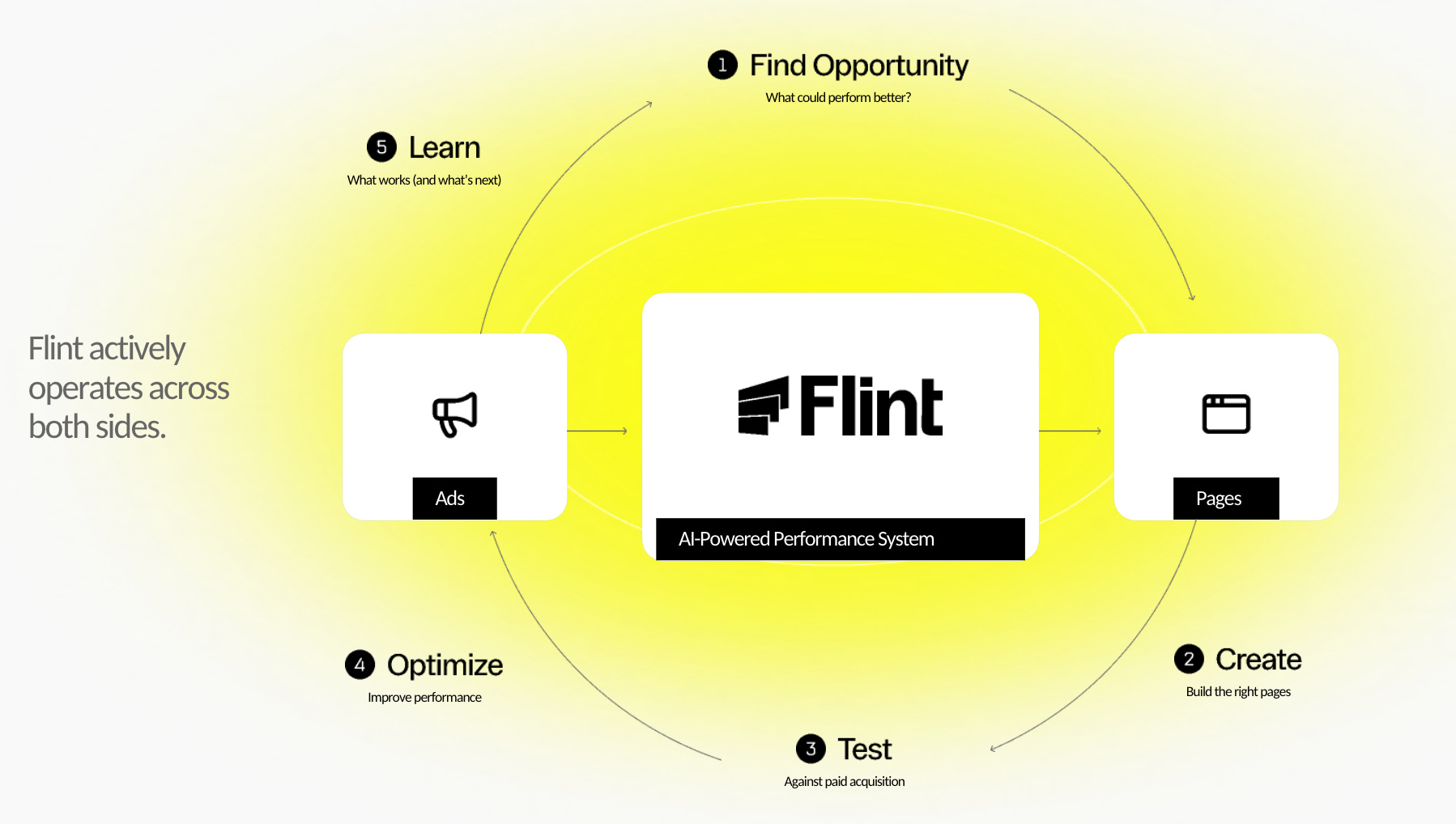
4. Flint: closed-loop performance marketing
What it is: A performance marketing platform created by Michelle Lim that unifies ad creative and landing page experience.
How the loop works: The system tracks full-funnel conversion behavior from initial ad click to page conversion $\rightarrow$ Identifies disconnects between ad messaging and landing page content $\rightarrow$ Iteratively adapts creatives and copy to optimize the entire journey.
Key result: Drives breakthroughs in conversion rate (CVR) and CAC by eliminating friction across the ad-to-page workflow.
5. Helena: self-improving AI-Marketer
Helena’s marketer dogfooded it grow from 55 to 1000 followers on X in 10 days.

Great run-down Alex! I think this is the biggest challenge right now, distributed teams using various tools, and no good solution to loop back and feed back all the crucial learnings in one place. Some tools already help especially for teams on Slack/Notion etc, or those using well connected tools. But there are still a lot of gaps to get to the true 'compound gtm' level I think, I dive deeper into this topic in my playbook https://revenuepuzzles.com/playbooks/compounding-gtm/